
Pruning
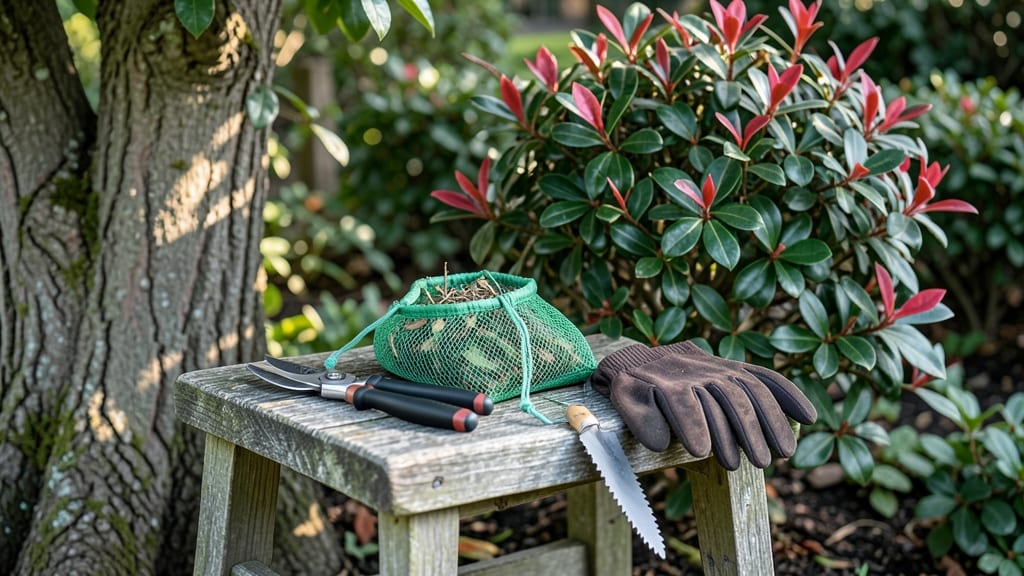
Winter’s the perfect time to revive your Photinia Fraseri 'Red Robin' with pruning—when dormant branches reveal the structure hiding under last year’s growth. ✂️ I've pruned mine every winter for years, and this is how I turn leggy, sparse canopies into lush, vibrant shrubs by summer.
The key? Pruning while the plant sleeps, before new growth starts in spring.
You'll need just three tools: sharp bypass pruners for clean cuts, loppers for thicker branches, and a bucket for clippings. Work on a dry day when the plant's energy is stored in roots, not leaves.
Start by removing any dead, diseased, or crossing branches first—these are your easy wins before tackling the structural shaping.
What you'll end up with is a denser, more compact shrub that blooms better and resists pests. New growth will emerge bright red, creating that signature 'Red Robin' color pop.
The secret is cutting just above a leaf node at a 45-degree angle, which encourages bushier growth instead of long, bare stems.
Here's where most gardeners go wrong: pruning too late in spring or cutting into old wood. Stick to winter, and you'll avoid shocking the plant. For larger shrubs, never remove more than one-third of the foliage in a single year—patience pays off with a fuller canopy by summer.
📚 In This Guide
- What you need
- Instructions
- Tips and common mistakes
- Wrapping up and next steps
What you need
- ● Pruning shears: Bypass pruners (sharp, clean, and disinfected) for small branches.
- ● Loppers: 1 pair (8–12" long) for thicker branches (½"–1" diameter).
- ● Pruning saw: 1 handheld saw (for branches >1" thick).
- ● Gloves: Heavy-duty gardening gloves (cut-resistant for safety).
- ● Disinfectant: 70% isopropyl alcohol or a pruning sealant (to prevent disease).
- ● Trash bags: 2–3 heavy-duty bags (for clippings).
- ○ Ladder (optional but helpful): Extendable or step ladder (if shrub is tall, 3–6 ft).
- ● Sharpie or marker: Permanent marker (to label cuts if needed).
- ● Hand pruners: Compact bypass pruners for precision trimming.
- ● Pruning rope: Lightweight cord (to secure branches during cuts).
- ● Work gloves with grip: For extra comfort on longer sessions.
- ● Plant food: Balanced fertilizer (10-10-10) for post-pruning recovery.
- ● Mulch: Shredded bark or compost (to protect roots after pruning).
Step-by-step guide to pruning Photinia Fraseri 'Red Robin'
Revitalize your 'Red Robin' with this simple, seasonal approach that keeps it lush and vibrant.
✂️ Step 1: Time Your Pruning for Maximum Impact
Prune your Photinia Fraseri 'Red Robin' in late winter or early spring, just as new growth begins. This timing ensures you remove dead wood while encouraging fresh, vibrant foliage before summer's heat. I always check for bud swell—those plump, swollen areas on stems signal it's time. Avoid pruning in fall, as new growth won't harden off before winter.
If you missed the window, you can do a light pruning in early summer to shape the plant, but avoid heavy cuts. The key is to prune when the plant is dormant but ready to wake up—this prevents stress and promotes lush regrowth. Grab your pruners and get started when you see those first signs of life.
✂️ Step 2: Remove Dead, Diseased, or Damaged Wood
Start by inspecting the plant for dead branches—these are brittle, dry, and snap easily when bent. Remove them first by cutting just outside the branch collar, the swollen area where the branch meets the trunk. Next, look for diseased or damaged wood, which may have blackened leaves, mold, or unusual spots. Prune these out completely to prevent spread.
I always work from the bottom up, making it easier to spot hidden issues. Sterilize your pruners with rubbing alcohol between cuts to avoid transferring disease. If a branch is larger than ½ inch in diameter, make a clean cut at a 45-degree angle about ¼ inch above a bud or side branch. This encourages healthy regrowth.
✂️ Step 3: Thin Out Overcrowded Branches
Photinia Fraseri 'Red Robin' thrives when it has good airflow, so thin out overcrowded or crossing branches to reduce disease risk. Look for branches that rub against each other or grow inward—they compete for sunlight and nutrients. Remove about ⅓ of the oldest wood to encourage new, vigorous growth from the base.
Focus on branches that are thinner than a pencil for easier removal. Cut back to a healthy bud or outward-facing branch to maintain the plant's natural shape. Avoid leaving stubs—always cut just above a bud or side branch. This step is where you’ll see the most dramatic improvement in your plant’s health and appearance.
☀️ Step 4: Shape the Plant for a Full, Balanced Canopy
Now it’s time to shape the plant for a full, balanced look. Start by trimming back the longest branches to encourage bushier growth. Cut just above a leaf node or outward-facing bud to promote new shoots. For a more rounded shape, trim the outer branches slightly more than the inner ones.
I like to step back every few cuts to check the overall shape—this helps me see where I need to focus. Avoid cutting more than ⅓ of the plant’s total foliage in one season, as this can stress the Photinia. If you’re unsure, err on the side of caution and remove less. The goal is to open up the center so sunlight reaches all parts of the plant.
💧 Step 5: Post-Pruning Care for a Strong Recovery
After pruning, give your Photinia a deep watering to help it recover. The roots will need extra moisture to support new growth. Apply a layer of mulch around the base (but not touching the trunk) to retain moisture and regulate soil temperature. I use 2-3 inches of organic mulch, like shredded bark or wood chips.
Monitor the plant closely for the first few weeks. New growth should appear within 4-6 weeks, and you’ll notice vibrant red new leaves emerging. If you see any signs of stress—like wilting or yellowing—reduce watering slightly and ensure it’s getting at least 6 hours of sunlight daily. With proper care, your 'Red Robin' will bounce back stronger than ever.
Tips & tricks for perfect Photinia Fraseri 'Red Robin' pruning
Here's what nobody tells you about transforming your 'Red Robin' from winter-weary to summer-showstopper.
Timing is Everything: The late winter to early spring window is non-negotiable for best results. I've seen plants struggle after summer pruning because they can't recover before winter's chill sets in. Look for those swollen buds—when you see them, it's your cue. If you missed the window, a light shaping in early summer is better than nothing, but don't expect the same dramatic results.
The Branch Collar Rule: When removing larger branches (over ½ inch), always cut just outside the branch collar—the swollen area where the branch meets the trunk. I learned this the hard way when a cut too close to the trunk left a wound that never healed properly. This simple technique prevents decay and promotes faster recovery. For branches thinner than a pencil, you can cut closer to the trunk, but still aim for that outward-facing bud.
Visual Cues for Healthy Cuts: After making your cuts, look for the bright green tissue just beneath the bark—this is the cambium layer where new growth will emerge. If you see this vibrant green, you've made a healthy cut. For branches larger than ½ inch, make your cut at a 45-degree angle about ¼ inch above a bud or side branch. This angle helps water run off the cut, reducing the risk of rot. I always test my angle by holding the pruners at a slight downward slope before making the cut.
Post-Pruning Recovery Hack: That deep watering after pruning isn't just about hydration—it's about giving your plant the energy to push out new growth. I've found that adding a slow-release fertilizer to the soil after watering gives an extra boost. And don't forget the mulch! That 2-3 inch layer acts like a blanket, keeping roots cool in summer and warm in winter. Monitor for new growth in 4-6 weeks—if you don't see buds forming, it might be time to adjust your sunlight exposure or check your soil pH.
Pro Tips for Photinia Fraseri Red Robin Pruning
- Here's what nobody tells you about transforming your 'Red Robin' from winter-weary to summer-showstopper.
- Timing is Everything: The late winter to early spring window is non-negotiable for best results. I've seen plants str...
- The Branch Collar Rule: When removing larger branches (over ½ inch), always cut just outside the branch collar—the sw...
Frequently asked questions
about pruning Photinia Fraseri 'Red Robin'—because every gardener deserves clarity! Here are the most common queries to help you master the art of winter revival.When is the best time to prune 'Red Robin' Photinia?
The ideal time is late winter or early spring (before new growth starts). Pruning in late winter removes dead wood and shapes the plant for spring blooms. Avoid heavy pruning in summer or fall, as it can stress the plant and reduce winter hardiness.
How much can I prune 'Red Robin' Photinia?
You can prune up to one-third of the plant’s growth in a single session without harming it. For shaping, remove 1-2 inches from the tips of branches to encourage bushier growth. Avoid over-pruning—this can lead to sparse foliage or even dieback.
Why is my Photinia turning brown after pruning?
Brown leaves or stems after pruning are often due to disease exposure (like Diplodia) or over-pruning. Sterilize tools with rubbing alcohol, avoid cutting into old wood, and prune in dry weather. If browning persists, check for fungal infections and treat with a copper fungicide.
Can I prune 'Red Robin' Photinia in summer?
Light summer pruning (like deadheading or minor shaping) is fine, but avoid heavy cuts. Summer pruning can stress the plant, making it more susceptible to pests and diseases. If you must prune, do it early in the morning to reduce heat stress on fresh cuts.
What’s a good alternative if my Photinia looks unhealthy after pruning?
If your 'Red Robin' is struggling, consider rejuvenation pruning: cut back all branches by half in stages over 2-3 years. For severe cases, replace the plant—some Photinias are prone to Diplodia tip blight, and renewal may be the best long-term solution.
Wrapping up and next steps
Pruning your Photinia Fraseri 'Red Robin' in winter isn’t just about tidying up—it’s your secret to a burst of fiery red foliage and a lush, healthy plant all season long! 🌿 With the right tools, timing, and techniques, you’ll keep your shrub thriving and looking its best.
Now that you’re armed with expert tips, there’s no better time to roll up your sleeves and give your plant the care it deserves.
🌟 Ready to Revive Your 'Red Robin'?
Grab your pruners, mark your calendar for late winter, and start pruning! Your vibrant summer canopy begins with this one simple step—so why wait? Happy pruning! ✂️💚