
How To
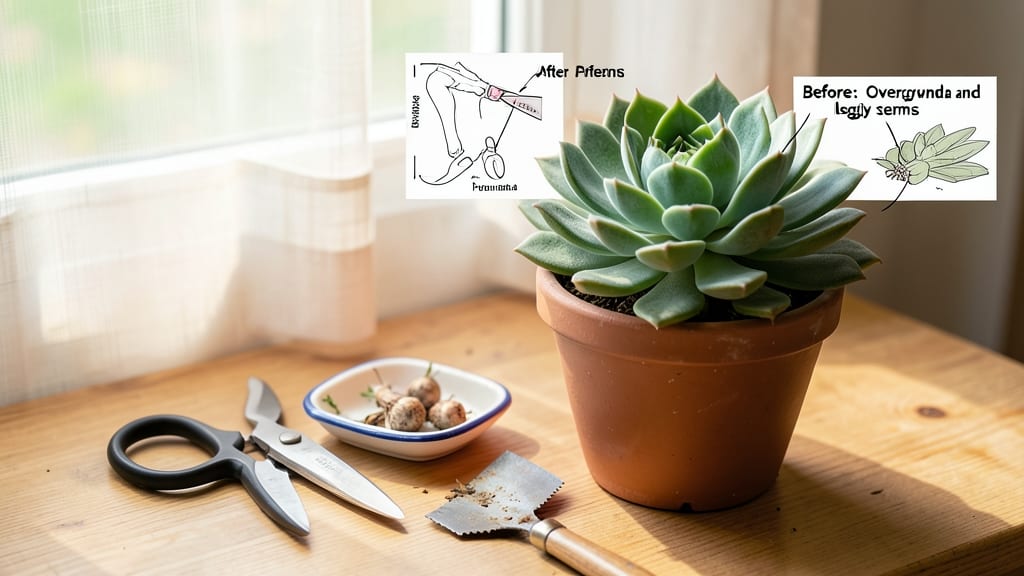
Pruning succulents isn't about cutting back—it's about revitalizing your plants with just three strategic snips. ✂️ I've turned leggy, sad-looking succulents into bushier, healthier plants using this method, and you can too.
The secret lies in understanding where to cut and when, so your plants don't just survive but thrive after the trim.
You'll only need clean, sharp scissors or pruners and a little patience. Start by removing dead or damaged leaves first, then trim leggy stems just above a leaf node to encourage new growth. Avoid over-pruning—never take more than one-third of the plant at once.
The best time to prune is in spring or early summer when your succulents are actively growing, and you'll see fresh new shoots within weeks.
📚 In This Guide
- What you need
- Instructions
- Tips and common mistakes
- Wrapping up and next steps
What you need
- ● Clean, sharp pruning shears or scissors (sterilized with rubbing alcohol to prevent disease 🦠). Size: Small, precision-tipped shears (like Felco or Fiskars) work best.
- ● Rubbing alcohol (70% or higher) or hydrogen peroxide (3%) – for sterilizing tools between cuts (1-2 oz per session).
- ● Well-draining potting mix (cactus/succulent blend, ~1-2 cups depending on repotting needs).
- ● Small pots or trays (3-4 inches wide) for propagating cuttings (1 per cutting or 1 shared tray for multiple).
- ○ Gloves (optional but recommended) – to protect hands from sap or sharp edges (nitrile or latex works well).
- ● Rooting hormone (gel or powder) – speeds up root growth for cuttings (small jar or packet).
- ● Grafting wax or beeswax – seals cuts on larger succulents to prevent rot (1 small block).
- ● Spray bottle with water – lightly mist cuttings to encourage rooting (8-12 oz).
- ● Label markers & tags – to track succulent varieties if propagating (pack of 10-20).
- ● Newtonia or succulent fertilizer – for feeding propagated cuttings after rooting (small bottle).
Step-by-Step instructions for pruning succulents
Here's my go-to method for pruning succulents—simple, effective, and perfect for beginners.
✂️ Step 1: Wait for the Right Time
Prune your succulents in early spring when new growth begins. This timing ensures you're cutting back just before the plant's active growing season kicks in. Avoid pruning during winter dormancy or extreme heat—both stress the plant and slow recovery.
Look for healthy, plump leaves as your cue. If you see leggy stems or overgrown clusters, that's your plant telling you it's ready. I always prune mine in March or April, right after the last frost date in my zone. This gives them plenty of time to regenerate before summer heat arrives.
🌿 Step 2: Use Clean, Sharp Tools
Grab your sterilized pruning shears or a sharp knife. Dull tools crush stems and invite rot, so I always wipe mine with rubbing alcohol before cutting. For small succulents, clean nail clippers work perfectly—just make sure they're sharp enough to cut through the stem cleanly.
Hold the plant firmly and cut just above a leaf node or where a leaf meets the stem. This encourages new growth from that point. If you're removing a whole stem, cut at a 45-degree angle to increase surface area for faster healing. Never tear or rip—always use a clean cut.
🌱 Step 3: Remove Leggy or Damaged Growth
Start by trimming any overly long, leggy stems that stretch toward light. These are often pale and thin, lacking the thick, fleshy texture of healthy growth. Cut them back to just above a healthy leaf node—this forces the plant to redirect energy to stronger, bushier growth.
Next, remove any yellowed, shriveled, or damaged leaves. These are dead weight and can harbor pests or disease. Use your fingers to gently twist off dead leaves or cut them at the base. For larger stems, I like to cut them into smaller pieces and propagate them—it's a great way to multiply your plants for free!
☀️ Step 4: Let the Plant Rest and Recover
After pruning, place your succulent in a bright, indirect light spot for 1-2 weeks. Avoid direct sun immediately—it can stress the plant as it heals. If you notice any cut areas looking mushy or discolored, that's a sign of rot, and you'll need to stop watering until it dries out.
Water lightly only after new growth appears. Succulents store water in their leaves, so they don't need extra hydration right after pruning. In fact, overwatering now is the fastest way to kill a freshly pruned plant. I usually wait until I see fresh, firm growth before watering again—usually about 2-3 weeks after pruning.
🪴 Step 5: Repot if Needed (Optional)
If your succulent looks crowded after pruning or the soil has broken down, now's the time to repot. Choose a container just 1 inch larger in diameter than the current one—succulents prefer being slightly root-bound. Fill the bottom with fresh cactus/succulent mix and place the plant at the same depth it was growing before.
Tap the pot gently to settle the soil and water lightly. If you're propagating cuttings, place them in a shallow tray of soil or water (for leaf cuttings) and keep them in bright, indirect light until they root. This step is optional but helps keep your succulents thriving and looking their best.
Tips & tricks for pruning succulents
Here's what nobody tells you about keeping your succulents thriving after pruning—these little details make all the difference.
Timing is Everything: The early spring window in Step 1 isn't just about avoiding frost—it's when your succulents naturally start redirecting energy to new growth. I've learned the hard way that pruning too early (like in late winter) can leave plants vulnerable to cold snaps, while waiting too late (May or June) can stress them before summer heat hits. March or April is that perfect sweet spot where your plants are ready but still have time to recover before their peak growing season.
Tool Prep Prevents Problems: Sterilizing your tools in Step 2 isn't just about clean cuts—it's about preventing fungal infections that can creep into fresh pruning wounds. I keep a small bottle of rubbing alcohol by my gardening station and wipe my tools before AND after each plant. For stubborn stems, I find that a quick dip in boiling water (for 10 seconds) between cuts keeps everything sanitized without damaging the tools.
Propagate Like a Pro: When you're cutting those leggy stems in Step 3, don't toss the cuttings! Place them in a shallow tray with just enough cactus/succulent mix to support them (about 1 inch deep). Keep them in bright, indirect light and mist lightly every 3-4 days. I've propagated entire new plants from what I thought were "waste" cuttings—some varieties like echeverias root in just 2-3 weeks this way.
Recovery Watch: That 1-2 week recovery period in Step 4 is your plant's chance to seal its wounds. Watch for the cut areas to develop a slight callus—this is nature's way of protecting itself. If you see any yellowing or soft spots developing during this time, that's your plant's SOS signal. Immediately stop watering and move it to a shadier spot until it stabilizes. I've saved many plants this way that would have otherwise rotted.
Pro Tips for Prune Succulents
- Here's what nobody tells you about keeping your succulents thriving after pruning—these little details make all the difference.
- Timing is Everything: The early spring window in Step 1 isn't just about avoiding frost—it's when your succulents naturally start redirecting energy to new growth.
- Tool Prep Prevents Problems: Sterilizing your tools in Step 2 isn't just about clean cuts—it's about preventing fungal infections that can creep into fresh pruning wounds.
Frequently asked questions
Got questions about pruning succulents? You’re not alone—even seasoned plant parents have their doubts! Here are answers to the most common queries to help you prune like a pro.
What’s the best time of year to prune succulents?
Spring or early summer is ideal! Pruning during active growth (March–June in most climates) lets your succulent recover faster and encourages bushier growth. Avoid winter—your plant is dormant and needs all its energy to survive. Pro tip: If you must prune in fall, wait until after the first frost for cold-hardy varieties.
Can I prune succulents in winter?
Generally, no—winter pruning stresses succulents, especially in cold climates. If you spot dead or damaged leaves, snip them off gently (no heavy cuts) to prevent rot. For tropical succulents (like Haworthia), minimal trimming is fine, but avoid major reshaping. Exception: If pests or disease strike, act fast and prune infected areas immediately.
How do I know if I’m over-pruning my succulent?
Watch for these red flags: yellowing leaves, soft stems, or stunted growth. Over-pruning removes too much foliage, leaving your plant weak and vulnerable to pests. Stick to 1/3 of the plant’s height or less per session. If your succulent looks “shocked,” give it time (and bright, indirect light) to bounce back—it’s tougher than you think!
What should I do with the cuttings after pruning?
Don’t toss those snips! Let them dry (callus) for 1–3 days in a warm, dry spot. Once healed, plant in well-draining soil or water (root in water for 2–3 weeks, changing the water every few days). Bonus: Propagate in groups for fuller pots faster. Just avoid overwatering—succulent cuttings rot easily!
My succulent is leggy—how do I fix it?
Leggy growth (long, sparse stems) usually means your plant isn’t getting enough light. Prune the top 1–2 inches off to encourage branching, then move it to a sunnier spot (4–6 hours of direct light daily). Avoid fertilizing until new growth appears—your succulent needs energy to recover, not extra nutrients. Quick fix: Rotate the pot weekly for even light exposure.
| Quick Troubleshooting Guide |
|---|
| Problem: Brown, mushy stems after pruning |
| Cause: Overwatering or fungal infection |
| Fix: Trim affected areas with sterilized tools, reduce watering, and ensure great drainage. |
| Problem: No new growth after pruning |
| Cause: Low light or underwatering |
| Fix: Move to brighter light and water only when soil is completely dry. |
Wrapping up and next steps
Pruning your succulents isn’t just about keeping them tidy—it’s a game-changer for their health, growth, and even propagation! 🌱 With just three simple cuts, you can encourage bushier plants, prevent overgrowth, and even grow new succulents from clippings.
Remember, the key is patience and consistency, and soon, your collection will thrive like never before.
Ready to put your new skills to the test? Grab those shears, pick a sunny spot, and start pruning today! Your succulents—and your green thumb—will thank you. 🌟