
How To
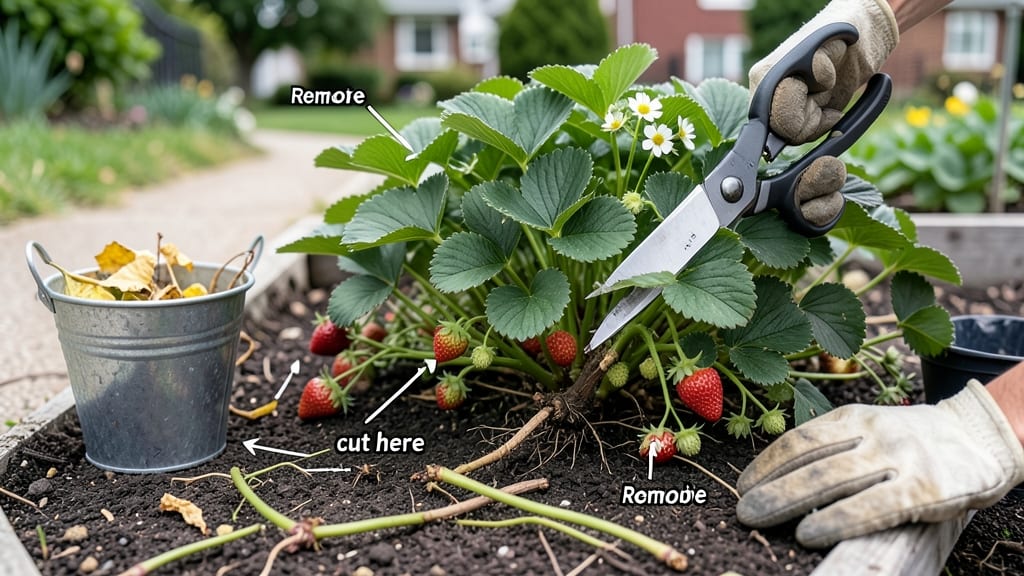
Pruning strawberries isn't just about trimming—it's the secret to doubling your harvest every season. 🌱 I learned this after my first year of growing strawberries, when I ignored the runners and dead leaves, only to watch my yield stay stubbornly small.
The right cuts redirect energy where it matters most: bigger, sweeter berries and healthier plants.
You only need three basic cuts: removing old fruit stems after harvest, trimming dead or yellow leaves, and deciding whether to keep or remove runners (depending on your variety). The best time to prune is right after your main harvest, when the plants have energy to recover before winter.
Just grab clean pruners, a pair of gloves, and you're ready to transform your strawberry patch.
📚 In This Guide
- What you need
- Instructions
- Tips and common mistakes
- Wrapping up and next steps
What you need
- ● Sharp pruning shears or bypass pruners – A pair with 5- to 7-inch blades (e.g., Felco F-2 or Corona Tools) for clean cuts. Must be sterilized with rubbing alcohol or bleach to prevent disease spread.
- ● Garden gloves – Nitrile or heavy-duty leather to protect against thorns and dirt. Size medium to large for dexterity.
- ● Disposable pruning bags or bucket – A 5-gallon capacity to collect trimmings and diseased leaves.
- ● Hose with nozzle or watering can – For post-pruning sanitation (rinse tools and plants to remove debris).
- ● Handheld leaf blower or broom – To clear away fallen leaves/debris after pruning.
- ● Fungicide spray (copper-based or neem oil) – 1 tsp per gallon of water to treat cuts if plants show signs of rot or mildew.
- ● Mulch (straw or shredded leaves) – 2-3 inches thick to retain moisture and suppress weeds post-pruning.
- ● Knee pad or stool – For comfort if your strawberry patch is large or low to the ground.
- ● Best time to prune: Early spring (just before new growth) or late winter. Avoid pruning during frost or extreme heat.
- ● Healthy plants: Prune only when strawberries are disease-free. Remove any yellowing or moldy leaves before main pruning.
- ● Weather check: Choose a dry, overcast day to prevent stress on freshly cut plants.
Step-by-Step guide to pruning strawberries for maximum yield
Here's the simple system I use every year to keep my strawberry patches productive and healthy.
✂️ Step 1: Remove Last Year's Fruit Stems After Harvest
After your main harvest ends in early summer, grab your pruning shears and cut off all the old fruit stems—those long, brown stalks that bore your berries. I make clean cuts right at the base where they meet the crown, about ¼ inch above the soil line. This prevents disease from lingering in dead stems and redirects the plant's energy toward next year's growth.
Work on a dry day when the soil isn't muddy—wet conditions can spread fungal spores. I like to do this after a light rain when the plants are hydrated but the ground isn't soupy. You'll notice new leaves starting to form along the crown within a few weeks—that's your plant's way of saying "thanks for the cleanup!"
🌱 Step 2: Thin Out Crowded Crowns in Early Spring
In late winter or early spring, before new growth appears, examine each plant's crown. You're looking for multiple stems growing from a single crown—this happens when runners from last year rooted in place. Using your fingers or shears, gently pull out or cut off all but the 3-4 strongest, healthiest stems per plant, leaving their base intact.
Real talk: This step feels counterintuitive because you're removing potential berry producers, but crowded crowns lead to smaller fruit and more disease. I mark my strongest stems with a bright ribbon so I don't accidentally cut them later. After thinning, water deeply to help the remaining stems establish.
✂️ Step 3: Trim Runners Strategically During the Growing Season
Throughout the growing season, you'll see long, trailing stems called runners developing. These are the plant's way of spreading, but they drain energy from fruit production. When runners appear, decide whether to remove them or let them root: For established beds, I cut most runners off at their base, keeping only 1-2 per plant if I want to expand the patch.
Here's the thing—if you're not propagating new plants, remove all runners. I use clean, sharp shears to make clean cuts right at the crown junction. You'll see your existing plants respond with bigger berries and fewer blank spots in the bed. Save any rooted runners you want to transplant to new locations.
🌿 Step 4: Clean Up Debris and Renew Mulch After Harvest
After your final harvest of the season, rake up all fallen leaves and old mulch from around your strawberry plants. This prevents overwintering pests and diseases from taking hold. I spread 2-3 inches of fresh straw mulch (the kind from grocery stores works great) around each plant, keeping it 6 inches away from the crown to prevent rot.
This final step protects your plants through winter and gives you a clean slate in spring. I always do this after the first frost when the plants have gone dormant but before heavy rains begin. Your plants will thank you next year with vigorous new growth and fewer weeds competing for nutrients.
Tips & tricks for pruning strawberries like a pro
Pruning strawberries might seem intimidating, but these simple tricks will help you avoid common mistakes and keep your plants thriving for years.
Timing is Everything: Don't rush Step 1—wait until after your main harvest in early summer when all fruit stems have turned brown and dried up. Cutting too early can remove potential fruit, while waiting too long lets disease settle in dead stems. I aim for right after a light rain when plants are hydrated but soil isn't muddy—this makes cutting easier and cleaner.
Tool Selection Matters: Use clean, sharp pruning shears for all cuts—dull blades can crush stems and spread disease. I sterilize my shears with rubbing alcohol between plants to prevent cross-contamination. For Step 2's crown thinning, fingers work fine for small plants, but shears give better control for larger crowns with multiple stems.
Visual Cues for Healthy Stems: When thinning crowded crowns in Step 2, look for stems that are vibrant green, not yellowing or brown. The strongest stems will have plump, healthy leaves and no signs of spots or blemishes. I mark my chosen stems with bright ribbon to avoid accidental cuts—this simple trick saves me from removing good stems later.
Runner Management Strategy: For Step 3, remember that runners are your plant's way of reproducing—but they compete with fruit production. If you're not expanding your patch, remove all but 1-2 runners per plant. I use these as cuttings for new plants, which gives me free strawberries next season! Save rooted runners by pinning them down with small rocks until they establish roots.
Pro Tips for Prune Strawberries
- Pruning strawberries might seem intimidating, but these simple tricks will help you avoid common mistakes and keep your plants thriving for years.
- Timing is Everything: Don't rush Step 1—wait until after your main harvest in early summer when all fruit stems have turned brown and dried up.
- Tool Selection Matters: Use clean, sharp pruning shears for all cuts—dull blades can crush stems and spread disease.
Frequently asked questions
Got questions about pruning strawberries? You’re not alone! Here are answers to the most common concerns—so you can keep your plants healthy and productive with confidence.
When is the best time to prune strawberries?
Prune June-bearing strawberries right after they finish fruiting (late spring to early summer), and everbearing/perennial varieties after their first harvest and again in late summer. Avoid pruning in fall or winter—plants need their foliage to store energy for next year’s growth.
What if I miss the pruning window? Can I still do it?
Yes! While timing matters, you can prune anytime except during extreme heat or frost. Just remove dead, diseased, or overcrowded leaves/crowns immediately. Your plants may skip a harvest that season, but they’ll rebound stronger for next year.
Do I need to prune strawberries every year?
Annual pruning keeps plants vigorous, prevents disease, and boosts fruit production. Neglecting it leads to smaller berries, fewer harvests, and weaker roots. Think of it like a haircut—regular maintenance = happier plants!
What if my strawberries get moldy or rot after pruning?
Mold/rot usually means poor airflow or wet foliage. Prune in dry, sunny weather, avoid cutting into the crown, and space plants 12–18 inches apart. Remove infected leaves immediately and treat with copper fungicide if needed.
Can I prune strawberries in containers?
Yes! Container-grown strawberries follow the same rules—just use clean, sharp scissors and monitor for overcrowding. Repot every 2–3 years to refresh soil, and prune more aggressively since space is limited. Drainage is key to prevent root rot!
Wrapping up and next steps
Pruning strawberries might seem intimidating, but with the right cuts and timing, you’ll unlock a healthier plant and bigger, sweeter harvests for years to come! 🌱 By removing old leaves, runners, and damaged growth, you’re not just tidying up—you’re giving your berries the best chance to thrive.
Start small, stay consistent, and soon you’ll be the proud grower of a lush, productive patch.
Ready to take the next step? Try pruning just one section of your strawberry bed this season and compare the results to unpruned plants. You’ll see (and taste!) the difference in no time. Happy gardening!