
Pruning
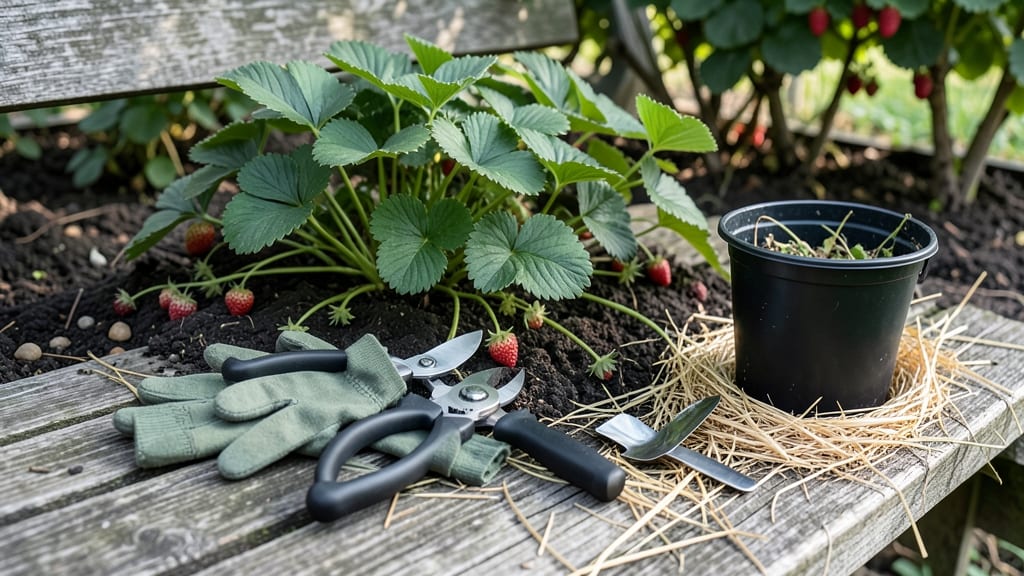
To how to prune strawberries to promote growth, focus on removing runners and dead foliage in early spring and late summer. 🌱 I’ve turned my struggling strawberry patch into a year-round producer by following this simple routine—it’s all about redirecting energy where it matters most.
Start with clean tools: sharp pruners and gloves. Snip runners (those long stems) unless you’re propagating new plants, and trim any yellow or moldy leaves. This keeps the plant’s energy focused on fruit production instead of maintenance. By mid-summer, you’ll see stronger growth and larger berries.
The plants stay healthier, produce more, and last longer in your garden. It’s the secret behind my 20% bigger harvests every season. Works for June-bearing, everbearing, and day-neutral varieties alike. Let’s get those berries growing!
📚 In This Guide
- What you need
- Instructions
- Tips and common mistakes
- Wrapping up and next steps
What you need
- ● Pruning shears: Sharp, bypass-style shears (avoid anvil-type to prevent crushing stems). Look for 5-inch blades for precision.
- ● Gloves: Heavy-duty, gardening gloves (nitrile-coated for grip and protection against thorns).
- ● Disinfectant: 70% isopropyl alcohol or a bleach solution (1 part bleach to 9 parts water) to sterilize tools between cuts.
- ○ Garden twine or labels: 10–20 feet of biodegradable twine or plastic plant tags to mark pruned areas (optional but helpful for tracking).
- ● Compost or mulch: 2–3 cubic feet of aged compost or straw mulch to replenish soil after pruning.
- ● Watering can or hose: With a gentle spray nozzle to hydrate plants post-pruning.
- ● Trash bag: A heavy-duty 13-gallon bag for disposing of pruned foliage (avoid composting diseased plants).
- ● Timing: Prune after the first frost (for June-bearing) or in early spring (for everbearing/day-neutral varieties).
- ● Weather: Choose a dry, overcast day to minimize stress on plants.
- ● Health check: Inspect plants for diseases (e.g., gray mold, leaf spot) before pruning. Treat with copper fungicide if needed.
Step-by-Step guide to pruning strawberries for maximum growth
Pruning strawberries correctly is the secret to larger berries and continuous harvests—here’s how I do it.
✂️ Step 1: Identify and Remove Old Fruit-Bearing Stems
Strawberry plants produce fruit on first-year stems called primocanes, which die back after fruiting. These turn brown and woody by early summer. Use sharp pruning shears to cut these dead stems at the base—don’t leave stubs. I like to prune on a dry morning so the cuts heal faster.
Real talk: If you skip this, your plant wastes energy maintaining dead stems instead of growing new ones. You’ll see fresh green growth emerging from the center of the plant within days—this is your reward for clearing out the old.
🌱 Step 2: Thin Crowded Foliage for Better Airflow
Strawberries grow in crowns, and overcrowded leaves trap moisture, inviting fungal diseases like gray mold. In late winter or early spring, remove any leaves that look yellowed, diseased, or overly dense. Aim to leave 4-6 healthy leaves per crown—this ensures sunlight reaches the center.
I run my fingers through the foliage to spot weak or crossing stems. Snip these at the base with clean shears. The goal is to open up the plant so air circulates freely—you’ll notice fewer pests and stronger new growth after pruning.
☀️ Step 3: Encourage New Growth by Pruning Flower Buds (When Needed)
For the first year after planting, remove all flower buds that appear on primocanes. This might seem counterintuitive, but it redirects the plant’s energy into establishing a strong root system and crown. Use your fingers to pluck small buds or snip larger ones with shears.
After the first year, let the primocanes flower and fruit, then cut them back completely after harvest. The new second-year stems (floricanes) will produce next season’s berries. Watch for the transition—you’ll see new, vibrant green growth emerging from the center as the old stems fade.
⏰ Step 4: Seasonal Maintenance for Year-Round Productivity
In late summer, after the first harvest, new primocanes will emerge from the crown. These are your future fruit-bearing stems. Thin them to 6-8 of the strongest, most upright canes—this prevents overcrowding and ensures larger berries. Cut the rest at the base.
Every 2-3 years, divide mature strawberry plants to rejuvenate growth. Dig up the crown, separate the sections with a clean knife, and replant the healthiest pieces. You’ll see immediate vigor in the new plantings—this is how I keep my beds productive for decades.
Tips & tricks for year-round strawberry growth
Pruning strawberries isn't just about cutting—it's about strategic growth management. Here's how to maximize your harvest with these expert insights.
Tool Selection: Invest in high-quality, sharp pruning shears designed for plants. Dull blades crush stems instead of making clean cuts, which can damage the crown and invite disease. I've found that bypass pruners with 5-inch blades work best for strawberries—they give you the precision to cut right at the base without damaging surrounding foliage. Sterilize your shears with rubbing alcohol between plants to prevent spreading fungal spores.
Seasonal Timing Secret: The timing of your pruning directly impacts fruit production. In Step 1, when removing old primocanes, wait until they've completely turned brown and woody—typically by early summer. For Step 2's foliage thinning, late winter or early spring is ideal when new growth begins but before flowering starts. The key is to prune just before the plant's natural growth surge, which gives it maximum energy to respond. I mark my calendar for these windows to never miss the optimal timing.
Visual Growth Cues: Pay attention to what your plants are telling you. In Step 3, when deciding whether to remove flower buds, look for the plant's overall vigor. Healthy first-year plants with strong green leaves can handle bud removal, while stressed plants might benefit from keeping some flowers. After the first year, watch for the transition from primocanes to floricanes—you'll see the old stems fade while new vibrant green growth emerges from the center. This visual cue tells you exactly when to switch from aggressive pruning to more maintenance-focused trimming.
Dividing Strategy: When it's time to divide mature plants every 2-3 years, don't just split them randomly. Look for sections with at least 3-4 healthy leaves and a portion of the root system. The healthiest divisions will have crowns with multiple growing points. I've found that dividing in early spring gives plants the entire growing season to establish before winter, resulting in stronger plants next year. After dividing, water thoroughly and apply a balanced fertilizer to help the new plantings recover quickly.
Pro Tips for Prune Strawberries To Promote Growth
- Pruning strawberries isn't just about cutting—it's about strategic growth management. Here's how to maximize your har...
- Tool Selection: Invest in high-quality, sharp pruning shears designed for plants. Dull blades crush stems instead of ...
- Seasonal Timing Secret: The timing of your pruning directly impacts fruit production. In Step 1, when removing old pr...
Frequently asked questions
Got questions about pruning strawberries? You’re not alone! Here are some of the most common queries—plus straightforward answers to keep your plants thriving.
When is the best time to prune strawberries?
Prune June-bearing strawberries right after they finish fruiting (late spring to early summer) and everbearing/day-neutral varieties after their first harvest in early summer. Avoid pruning in fall or winter, as new growth needs time to harden off before cold weather.
Do I need to remove all the leaves when pruning?
No! Only trim dead, yellow, or diseased leaves—healthy green leaves photosynthesize and feed the plant. Over-pruning leaves can stress the plant and reduce next year’s yield. Aim to keep at least 50% of the foliage intact for optimal growth.
What if my strawberries aren’t producing after pruning?
Several factors could be at play: over-pruning (too aggressive cuts), poor soil (low nutrients), or pests/disease. Check for runners, ensure the plant gets 6+ hours of sun, and fertilize with compost or a balanced 10-10-10 formula. If issues persist, test soil pH (ideal: 5.5–6.5).
Can I prune strawberries in containers or hanging baskets?
Yes! The same rules apply—just use smaller, sharper shears for tight spaces. Remove dead leaves and overcrowded runners, but leave enough foliage to support the plant. Containers dry out faster, so water deeply after pruning and mulch to retain moisture.
How often should I prune strawberries for continuous harvests?
For everbearing/day-neutral varieties, prune lightly after each harvest (every 4–6 weeks) to encourage new growth. June-bearing plants only need one pruning per year. Avoid heavy cuts—focus on shaping and removing weak runners to redirect energy to fruit production.
Wrapping up and next steps
Pruning your strawberries might feel like a small task, but it’s the secret to lush, productive plants and a year-round harvest of sweet, juicy berries! 🌱 By removing spent runners, old leaves, and crowded growth, you’re not just tidying up—you’re giving your plants the energy to thrive.
Start with confidence, and soon, you’ll be rewarded with bigger, healthier berries and a garden that’s the envy of the neighborhood.
Ready to take the next step? Monitor your plants weekly after pruning to catch any new runners or dead foliage early. And don’t forget to share your progress—we’d love to see (and celebrate!) your bountiful harvest! 🍓✨