
Pruning
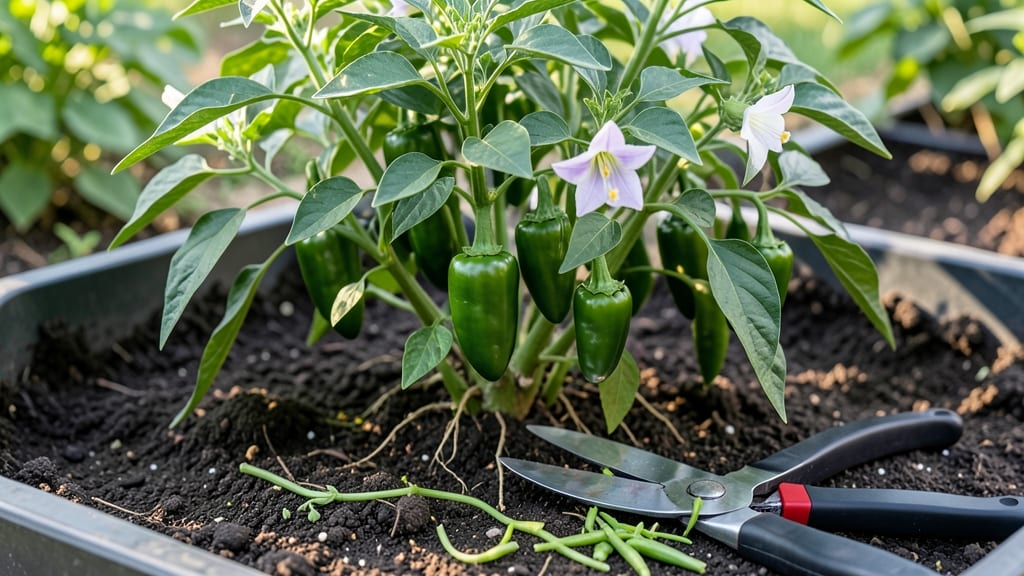
Pruning jalapeño pepper plants isn't just about shaping—it's about unlocking hotter peppers and bigger yields by directing energy where it matters most. 🌱 I learned the hard way that skipping pruning means fewer peppers and more leggy, disease-prone plants.
The right cuts encourage bushier growth and better air circulation, which keeps your plants thriving from transplant to harvest.
Start pruning when plants are 4-6 inches tall, focusing on removing the lower leaves to improve airflow and prevent soil-borne diseases. Use clean, sharp pruners to snip just above a leaf node—never tear or crush stems.
Suckers (those small shoots in the leaf axils) are prime targets: pinch them off early to avoid wasting plant energy. This isn't about making your plant look perfect; it's about setting it up for maximum production.
By mid-season, you’ll notice thicker stems and more branches, each capable of producing multiple peppers. Prune again after heavy harvests to encourage new growth and prevent overcrowding. The payoff?
Plants that stay healthy longer, resist pests better, and produce more peppers per plant than unpruned counterparts. It’s not rocket science—just strategic cuts at the right time.
Even experienced gardeners over-prune or cut too late in the season. Stick to 10-15% of the plant’s foliage per session, and avoid pruning after early fall when plants prep for winter. With these simple steps, your jalapeños will be hotter, healthier, and more productive than ever before.
📚 In This Guide
- What you need
- Instructions
- Tips and common mistakes
- Wrapping up and next steps
What you need
- ● Pruning shears or scissors: Sharp, clean, and sterilized (70% isopropyl alcohol works great!). Avoid dull tools—they crush stems instead of making clean cuts. Recommended: Felco F-2 or similar bypass pruners.
- ● Gloves: Heavy-duty gardening gloves (nitrile or leather) to protect your hands from thorns and spicy sap. Pro tip: Wear long sleeves too!
- ● Disinfectant (rubbing alcohol or bleach solution): 1 part bleach to 9 parts water for sterilizing tools between cuts. Prevents disease spread!
- ● Sharpie or permanent marker: For labeling pruned branches if you’re experimenting with different techniques (e.g., "Pruned 6/15").
- ● Trash bag or bucket: To collect pruned debris and keep your workspace tidy.
- ● Horticultural oil or copper fungicide: Spray tools before/after pruning to prevent fungal infections. Bonus: Use on plants if you spot early signs of disease.
- ● Garden twine or clips: For supporting heavy branches post-pruning (if needed).
- ● Notebook or app: Track pruning dates, plant responses, and pepper yields for future reference.
- ● Pruning saw: Only if dealing with very thick, woody stems (uncommon for jalapeños but handy for older plants).
Step-by-Step guide to pruning jalapeño pepper plants
Here’s how to shape your peppers for maximum yield and plant vitality—without sacrificing next year’s harvest.
✂️ Step 1: Identify and Remove Suckers for Stronger Growth
Suckers are the small shoots that form in the leaf axils (where a leaf meets the stem). These energy vampires divert nutrients from fruit production. Use clean, sharp pruning shears to snip them off at the base—don’t leave stubs, or they’ll regrow. I prune suckers weekly during the growing season, starting when plants reach 12-18 inches tall. This keeps the plant’s focus on developing peppers instead of extra foliage.
Watch for suckers on the lower third of the plant first—these are the most aggressive. If you miss them, the plant will put energy into growing vertical stems instead of ripening peppers. Strong jalapeños have thick, bushy stems with peppers clustered near the top; weak ones stretch upward with few fruits.
🌿 Step 2: Prune Lower Leaves to Improve Airflow and Sunlight
Remove yellow or diseased leaves immediately—they trap moisture and invite fungal infections like powdery mildew. For healthy leaves, focus on the bottom 6-12 inches of the plant. Use your fingers or shears to pinch off leaves that touch the soil, as they can rot and harbor pests. This step is especially critical in humid climates or crowded gardens.
You’ll notice a difference within 3-5 days: new leaves emerge higher on the stem, and sunlight reaches the lower peppers. This encourages even ripening and reduces the risk of blossom-end rot. If your plants are in containers, prune more aggressively—limited space means airflow is even more critical.
☀️ Step 3: Thin Fruit Clusters for Larger, Hotter Peppers
Jalapeños produce fruit in clusters, but overcrowding leads to small, underdeveloped peppers. Once peppers reach 2-3 inches long, gently twist off all but 2-3 of the largest, healthiest peppers per cluster. This redirects the plant’s energy into fewer, hotter peppers. I prioritize peppers closest to the main stem—they ripen first and set the stage for the next flush.
If you’re growing for heat (capsaicin content), leave the smallest peppers—they often pack more spice. Avoid pruning when peppers are green and firm (they’ll fall off easily) or red and ripe (they’re past their prime). The goal is to harvest 30-50% fewer peppers but with intensified flavor and size.
⏰ Step 4: Time Your Final Prune for Late-Season Harvest Boost
About 4-6 weeks before your first frost, give your jalapeños a final prune to push energy into ripening existing peppers. Cut back 1/3 of the top growth (the newest leaves and stems) to signal the plant it’s time to focus on maturation. This is especially effective if your plants are still producing flowers but few peppers—it tricks them into ripening what’s already there.
After pruning, reduce watering slightly to every 5-7 days (unless your soil is sandy). The plant will respond by flushing out stored energy into the peppers, resulting in a late-season harvest that’s often hotter and more flavorful. If frost threatens before peppers ripen, harvest them green—they’ll still be usable (just less spicy).
Tips & tricks for pruning jalapeño pepper plants
These strategic cuts will transform your jalapeño plants into powerhouses of flavor and productivity.
Tool Prep: Sterilize your pruning shears with rubbing alcohol between plants to prevent spreading disease. I use a small spray bottle to disinfect blades in the field—it takes seconds and saves your entire harvest from contamination. Clean tools also make cuts heal faster, reducing stress on the plant.
Visual Cues for Step 1: In Step 1, look for suckers that grow at a 45-degree angle from the main stem—they're the classic "V" shaped shoots. These are the ones to remove immediately. I check plants every 3-4 days during peak growth, especially after rain when new suckers emerge fastest. The lower third of the plant is always the hotspot for these energy thieves.
Container Adaptations: If growing in containers, prune more aggressively in Step 2 since limited space restricts airflow. Remove every other leaf along the stem's bottom half to create vertical channels for sunlight penetration. I've found container plants need 20-30% more pruning than ground plants to compensate for their restricted root zones and shallower soil volumes.
Frost Timing: For the final prune in Step 4, check your local frost date and count back 6 weeks—not calendar weeks. Early autumns can throw off this timing, so verify with your local agricultural extension service. I once missed this by a week and lost half my harvest to frost—don't make that mistake!
Pro Tips for Prune Jalapeno Pepper Plants
- These strategic cuts will transform your jalapeño plants into powerhouses of flavor and productivity.
- Tool Prep: Sterilize your pruning shears with rubbing alcohol between plants to prevent spreading disease.
- Visual Cues for Step 1: In Step 1, look for suckers that grow at a 45-degree angle from the main stem—they're the classic "V" shaped shoots.
Frequently asked questions
Got questions about pruning your jalapeño plants? You’re not alone! Here are some of the most common concerns—and straightforward answers—to help you grow like a pro.
When is the best time to prune jalapeño plants?
The ideal time to prune is early in the growing season (spring) or after harvest to encourage bushier growth and more peppers. Avoid heavy pruning late in the season—it can stress plants before winter. Light maintenance trims (removing yellow leaves or dead flowers) can happen year-round!
How much can I prune off without harming the plant?
Don’t go overboard! Remove no more than 1/3 of the plant’s foliage at once. Focus on dead, yellowing, or crowded leaves and suckers (shoots growing from the stem). Healthy jalapeños thrive with strategic cuts—not drastic ones. Think of it like a haircut: shape, not sacrifice!
Will pruning make my jalapeños hotter?
Indirectly, yes! Pruning redirects energy to fruit production, often resulting in more peppers (and potentially hotter ones if the plant’s resources focus on ripening). However, heat levels are mostly genetic—pruning won’t turn mild jalapeños into ghost peppers, but it’ll help them peak their potential!
What if my jalapeño plant looks sad after pruning?
Don’t panic! Plants may temporarily wilt post-prune, but they’ll bounce back in 1–2 weeks if given water, sunlight, and time. Avoid pruning during heatwaves or droughts—stress compounds stress. If leaves turn crispy or yellow persistently, you may have over-pruned or dealt with pests.
Can I prune jalapeños grown in containers?
Container-grown jalapeños benefit even more from pruning since space is limited. Just avoid cutting into the root ball (stick to stems/leaves) and ensure your pot has drainage. Prune aggressively in spring to encourage bushier growth—containers can’t handle as much foliage as garden beds!
Wrapping up and next steps
Pruning your jalapeño plants isn’t just about keeping them tidy—it’s a game-changer for bigger yields, stronger plants, and even hotter peppers! 🌶️ By following the right techniques, you’ll encourage healthier growth, better airflow, and more energy focused on fruit production.
Whether you’re a seasoned gardener or just starting, these steps make the process simple and rewarding.
Now that you’re armed with the know-how, grab those pruners and get to work! Start small, observe your plant’s response, and adjust as needed. Before you know it, you’ll be harvesting a bounty of fiery jalapeños—perfect for spicing up your favorite dishes. Happy pruning! 🌱✨