
Pruning
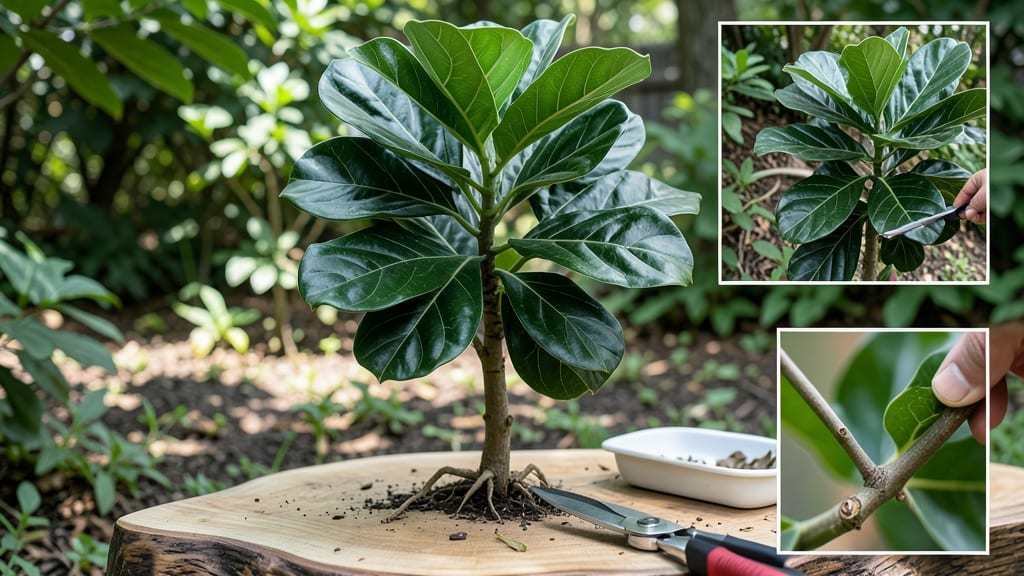
Reviving the fiddle leaf fig plant with just three simple cuts can turn droopy leaves into lush, bushy growth—if you prune at the right time and in the right way. 🌿 I’ve brought back more than a few stressed-out fiddle leaf figs using this method, and the key is working with the plant’s natural rhythm, not against it.
The best time to prune is late spring or early summer, when the plant is actively growing and can recover quickly. Avoid pruning in fall or winter, when the plant is already stressed from lower light.
You’ll need sterilized pruning shears (or clean scissors) to make clean cuts just above a leaf node—this is where new growth will sprout. Start by removing any yellow or brown leaves at the base of the stem, then trim back leggy stems to encourage bushier growth.
The goal is to shape the plant while keeping at least two healthy leaves on each remaining stem. After pruning, give your plant a little extra care: keep the soil lightly moist and place it in bright, indirect light to help it recover.
This method works for fiddle leaf figs of any size, from small tabletop plants to floor-standing giants. With the right timing and technique, you’ll see new leaves emerging in just 4-6 weeks, and your plant will look fuller than ever before.
📚 In This Guide
- What you need
- Instructions
- Tips and common mistakes
- Wrapping up and next steps
What you need
- ● Pruning shears or scissors – Choose sharp, clean bypass pruners (avoid dull tools—they crush stems!). A small pair (4-6 inches) works best for fiddle leaf figs.
- ● Rubbing alcohol (70% or higher) – 1 small bottle to sterilize tools before/after cuts (prevents bacterial/fungal infections).
- ○ Horticultural sealant (optional but helpful) – 1 small tube (like Tree Seal or Pruning Seal) to coat larger cuts and reduce sap oozing.
- ● Disposable gloves – 1 pair (latex or nitrile) to protect your hands from sap and sharp edges.
- ● Newspaper or drop cloth – 1-2 sheets to lay under your plant and catch fallen leaves/debris.
- ● Small container or tray – 1 shallow dish (8x10 inches) to collect cuttings for propagation.
- ● Rooting hormone – 1 small pack (like Rootone) to boost success if propagating cuttings.
- ● Spray bottle with water – To mist cuttings and prevent wilting while rooting.
- ● Sharp pencil or marker – For labeling cuttings if you’re experimenting with propagation.
- ● Hair dryer (cool setting) – To speed-dry cuts and reduce sap bleeding on larger stems.
Step-by-Step instructions for pruning a fiddle leaf fig plant
Reviving your fiddle leaf fig with just three strategic cuts is easier than you think.
✂️ Step 1: Identify and Remove Dead or Damaged Leaves
Start by scanning your plant for any leaves that are brown, crispy, or completely wilted—these are dead and need to go. Use clean, sharp pruning shears to cut just above the leaf stem where it meets the main branch. This prevents unsightly stubs and keeps the plant looking tidy. I always sterilize my shears with rubbing alcohol first to avoid introducing bacteria.
Don’t worry about the size of the leaf—even small, damaged leaves can harbor pests or disease. If you’re unsure whether a leaf is dead or just struggling, give it a gentle tug. If it comes off easily, it’s ready to be removed. You’ll know you’re doing it right when the plant starts looking cleaner and more vibrant almost immediately.
✂️ Step 2: Trim Overcrowded or Leggy Growth
Next, look for branches that are growing too close together or stretching out unnaturally (this is called "leggy" growth). These branches compete for light and nutrients, which weakens the plant. Use your shears to cut back the leggy stems just above a leaf node—this is where new growth will sprout. Aim to trim back to a point where the remaining stem has at least two healthy leaves.
If you’re unsure where to cut, think of it like trimming your hair: you want to leave enough length for regrowth but not so much that the plant looks bare. A good rule of thumb is to cut back to a spot where the stem is about 1-2 inches below a set of leaves. This encourages fuller, bushier growth over time.
✂️ Step 3: Prune to Encourage New Growth and Shape the Plant
Now it’s time to shape your fiddle leaf fig. Choose a few of the longest, healthiest branches and trim them back by about one-third of their length. This might sound drastic, but it signals to the plant that it’s time to focus on producing new, stronger growth. Cut just above a leaf node, and angle the cut slightly downward to prevent water from pooling.
This is where the magic happens: pruning at the right spots encourages the plant to branch out and fill in any sparse areas. If your plant has become top-heavy or lopsided, use this step to balance it out. You’ll see new leaves emerging from the nodes within a few weeks—this is your reward for a job well done.
💧 Step 4: Clean Up and Care for Your Pruned Plant
After pruning, remove any fallen leaves or debris from the area around your plant. This keeps pests away and prevents moisture from lingering, which can cause rot. Wipe down the leaves with a damp cloth to remove dust, and give your fiddle leaf fig a thorough watering—just enough to moisten the soil without soaking it.
Place your pruned plant in a spot with bright, indirect light for a few days to recover. Avoid direct sunlight immediately after pruning, as the new growth can be sensitive. Within 4-6 weeks, you should see fresh, healthy leaves emerging, and your plant will look fuller and more energetic than ever.
Tips & tricks for pruning a fiddle leaf fig plant
Here's what nobody tells you about pruning that makes all the difference.
Tool Prep is Everything: Before you even touch your plant, sterilize your pruning shears with rubbing alcohol. I learned this the hard way after my fiddle leaf fig developed brown spots weeks after pruning—turns out, old shears can transfer bacteria that causes rot. A quick wipe with alcohol ensures clean cuts every time.
Look for the Right Nodes: In Step 2 and Step 3, focus on cutting just above a leaf node (the small bump where leaves grow). This is where new growth emerges! I always count back about 1-2 inches from the node to leave enough stem for regrowth. The key is patience—new leaves will appear within 2-3 weeks if you've cut in the right spot.
Don't Over-Prune: While it might be tempting to trim back aggressively, remember that fiddle leaf figs store energy in their stems. In Step 3, when you're cutting back by one-third, leave at least 2-3 healthy leaves on each branch. This ensures your plant has enough energy to recover and produce new growth. I've seen people over-prune and end up with bare stems that take months to recover.
Light Matters After Pruning: After you've finished all four steps, place your plant in bright, indirect light for the first few days. Direct sunlight can stress new growth, so avoid placing it near south-facing windows immediately after pruning. I've noticed that plants in lower light conditions (like north-facing rooms) recover more slowly, so if your space is dim, supplement with a grow light for better results.
Pro Tips for Prune Fiddle Leaf Fig Plant
- Here's what nobody tells you about pruning that makes all the difference.
- Tool Prep is Everything: Before you even touch your plant, sterilize your pruning shears with rubbing alcohol. I lear...
- Look for the Right Nodes: In Step 2 and Step 3, focus on cutting just above a leaf node (the small bump where leaves ...
Frequently asked questions
Got questions about pruning your fiddle leaf fig? You’re not alone! Here are some of the most common concerns—plus straightforward answers to keep your plant thriving.
When is the best time to prune a fiddle leaf fig?
The ideal time is early spring (before new growth starts) or late winter. Avoid pruning in fall or winter—this is when your plant is dormant and more vulnerable to stress. If you spot dead or yellowing leaves anytime, trim them immediately to prevent disease.
Can I prune a fiddle leaf fig too much?
Yes! Over-pruning (cutting more than 20-30% of the foliage) can shock your plant, leading to stunted growth or leaf drop. Stick to removing only dead, damaged, or overly leggy branches. Think of it like a haircut—you want to shape, not strip!
What should I do with the cuttings?
Don’t toss those pruned stems! You can propagate them in water or soil to grow new plants. Place cuttings in a jar of water (change weekly) or plant them in moist potting mix. Keep them in bright, indirect light—roots usually sprout in 2-4 weeks!
Why is my fiddle leaf fig dropping leaves after pruning?
Leaf drop can happen if your plant is stressed from over-pruning, root disturbance, or sudden changes in light/temperature. To help it recover:
- Keep it in stable conditions (65–85°F, indirect light).
- Avoid fertilizing for 4–6 weeks post-prune.
- Mist leaves lightly to boost humidity.
Can I prune a fiddle leaf fig in low light?
Pruning in low light is riskier because your plant relies on leaves to photosynthesize. If you must prune in dim conditions, do so lightly (only remove dead/dying leaves) and move the plant to brighter light (10+ feet from a window) immediately after. Avoid heavy cuts until you can relocate it.
Wrapping up and next steps
Pruning your fiddle leaf fig doesn’t have to be intimidating—it’s all about confidence, patience, and a few strategic cuts! 🌿 With the right tools, timing, and technique, you’ll encourage lush regrowth and keep your plant thriving.
Now that you’re armed with the know-how, go ahead and give it a try—your fiddle leaf fig will thank you with vibrant new leaves!
Ready to take it further? Next up: Learn how to propagate those pruned cuttings and expand your plant collection here!