
How To
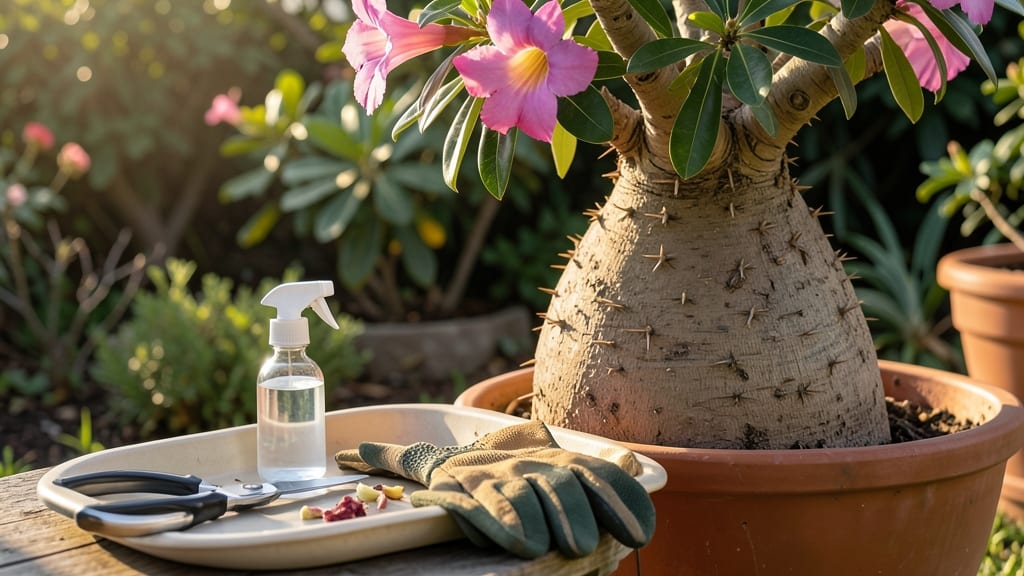
Pruning desert rose transforms it from a thorny mess into a fragrant, bushier beauty. ✨ The key is timing—spring or early summer when new growth signals the plant’s readiness to shape itself. I’ve pruned mine every year since 2018, and the difference in blooms and form is night-and-day.
Start by snipping dead, leggy, or crossing branches at the swollen trunk base—those thick, woody sections are where new growth emerges. For potted plants, aim for a rounded shape; in-ground roses can handle slightly more aggressive pruning.
Just don’t go overboard: removing more than one-third of the plant stresses it, even if it’s hardy.
After pruning, water deeply but avoid soaking the trunk—rot is a silent killer for desert roses. A light fertilizer with phosphorus boosts blooms, and within 4-6 weeks, you’ll see fresh green shoots pushing through.
The best part? Fewer thorns and more fragrant flowers by next season. Now grab those shears—your desert rose is waiting!
📚 In This Guide
- What you need
- Instructions
- Tips and common mistakes
- Wrapping up and next steps
What you need
- ● Bypass pruning shears: Sharp, clean, and 5–7 inches long (avoid anvil shears—they crush stems). Quantity: 1 pair.
- ● Sterilized pruning saw: For thicker stems (1–2 inches in diameter). Quantity: 1.
- ● Heavy-duty gloves: Thorn-proof, long sleeves (Desert Roses pack a punch!). Quantity: 1 pair.
- ● Rubbing alcohol (70%+): For sterilizing tools between cuts. Quantity: Small bottle.
- ○ Pruning sealant (optional): Tree wound dressing to prevent sap oozing on cuts >1 inch wide.
- ● Long-sleeved shirt and pants: Protects against thorns and sap irritation.
- ● Safety glasses: In case of errant branches.
- ● Trash bag or bucket: For collecting pruned debris.
- ● Hose or water spray bottle: To clean sap off tools/skin post-pruning.
- ● Choose the right time: Prune after blooming (late spring/summer) or early spring (before new growth).
- ● Check the weather: Avoid pruning if rain or extreme heat (above 90°F/32°C) is forecasted for 24 hours.
- ● Assess plant health: Skip pruning if the plant is stressed, wilting, or diseased.
Step-by-Step guide to pruning desert rose for health and beauty
Here's how I keep my desert roses thriving with a simple, seasonal pruning routine that encourages lush growth and fewer thorns.
🌿 Step 1: Prune in Late Winter for New Growth
Wait until late February or early March when new growth begins but before buds swell. This is the perfect time to shape your plant and remove dead wood. Start by cutting back any branches that are brown, brittle, or clearly dead—these won't regrow and just take energy from healthy growth.
Use sharp, clean pruners to make cuts just above a leaf node or outward-facing bud. I like to angle my cuts slightly to prevent water from pooling. This first pruning jumpstarts fresh, vibrant growth for spring. Watch for new green shoots within a few weeks—that's your sign you've done it right.
✂️ Step 2: Light Pruning in Early Summer to Encourage Blooms
In June or July, give your desert rose a light trim to promote flowering. Remove any leggy or overcrowded branches that are blocking light from reaching the center. The goal here is to open up the plant's canopy so air circulates better and flowers get plenty of sun.
Focus on cutting back branches that have already bloomed to encourage new flower buds to form. I usually remove about one-third of the oldest growth at this stage. You'll notice more branches with flower buds within 4-6 weeks if you've pruned at the right time.
🌱 Step 3: Minimal Pruning in Fall to Prepare for Dormancy
In late September or October, as temperatures drop, do a final light pruning to remove any dead or diseased branches. This helps your desert rose enter dormancy cleaner and healthier. Avoid heavy pruning now—you want to leave plenty of foliage to photosynthesize until winter.
Look for branches that have stopped growing and turned woody. These are safe to remove now. I also trim back any overly long branches that might break under winter conditions. The key is to keep the plant neat without stressing it before its natural rest period.
⏰ Step 4: Post-Bloom Pruning in Early Spring to Shape the Plant
After your desert rose finishes blooming in April or May, do a shaping prune to maintain its form. Remove any branches that have finished flowering and are looking tired. This encourages new growth and keeps your plant looking full and vibrant.
Pay attention to the plant's natural shape—desert roses often grow in a rounded form. I like to trim back any branches that are growing too upright or outward to maintain that beautiful rounded silhouette. You'll see fresh, green growth appearing within 2-3 weeks of this pruning.
💧 Step 5: Year-Round Maintenance to Reduce Thorns
Throughout the year, keep an eye out for branches that are growing too close together or becoming overly thorny. Desert roses naturally produce thorns, but you can reduce them by pruning back any overly spiny branches. Always wear gloves when pruning—those thorns are sharp!
I also recommend pinching back the tips of new growth occasionally. This encourages the plant to bush out rather than grow tall and leggy. The result is a fuller, more manageable plant with fewer thorns and more flowers. Watch for new side shoots forming after pinching—that's your plant responding well to the pruning.
Tips & tricks for pruning desert rose like a pro
These simple tricks will help you transform your desert rose into a thriving, fragrant beauty with minimal effort.
Tool Prep: Before you start pruning, make sure your pruners are sharp and clean. Dull blades can crush stems instead of making clean cuts, which stresses the plant. I like to wipe down my pruners with rubbing alcohol between cuts to prevent spreading any potential diseases. This small step makes all the difference in how your plant responds to pruning.
Seasonal Timing: The timing in Step 1 (late February or early March) is crucial because you're targeting the plant's natural growth cycle. If you prune too early, you risk cutting back new growth that hasn't emerged yet. In Step 2, that 4-6 week window for new flower buds to appear is your reward for precise summer pruning—don't rush it! The plant needs this time to adjust and produce new blooms.
Visual Cues: When pruning in Step 2, look for branches that are growing inward toward the center of the plant—these are the ones blocking sunlight. Also, watch for branches with spent flowers that are turning brown or woody. These are perfect candidates for removal. In Step 5, the new side shoots that appear after pinching should be your guide—they tell you the plant is responding well to your maintenance.
Safety First: Always wear gloves when pruning desert roses, as those thorns are sharp and can draw blood easily. I recommend using heavy-duty gardening gloves with long sleeves for extra protection. Also, never prune when the plant is wet—this can spread diseases and make thorns even more dangerous to handle.
Pro Tips for Prune Desert Rose
- These simple tricks will help you transform your desert rose into a thriving, fragrant beauty with minimal effort.
- Tool Prep: Before you start pruning, make sure your pruners are sharp and clean.
- Seasonal Timing: The timing in Step 1 (late February or early March) is crucial because you're targeting the plant's natural growth cycle.
Frequently asked questions
Got questions about pruning your Desert Rose (Adenium obesum)? You’re not alone—this stunning succulent can be tricky to tame! Below, we’ve rounded up the most common queries to help you keep your plant thriving, fragrant, and (mostly) thorn-free.
When is the best time to prune Desert Rose?
The ideal window is late winter to early spring (just before new growth starts) or right after flowering (summer/fall). Avoid pruning during extreme heat or cold—your plant needs energy to recover! For severe shaping, split it into two sessions: first to remove dead wood, then again in spring for aesthetics.
Can I prune Desert Rose in summer? What about winter?
Summer pruning is risky—the heat stresses the plant, and cuts may not heal properly. If you must prune in summer (e.g., to remove dead branches), do it early morning or late evening and keep humidity high. Winter pruning? Only if your climate is mild (above 50°F/10°C). Below freezing? Wait until spring.
How do I stop my Desert Rose from getting too leggy or woody?
Leggy or woody growth happens from lack of light or over-pruning. Fix it by:
- Moving the plant to bright, indirect light (south-facing window or grow lights).
- Pruning just above a leaf node (not too close to the trunk) to encourage bushier growth.
- Avoid cutting back more than 1/3 of the plant at once—gradual pruning prevents shock.
Should I prune flowers or seed pods from my Desert Rose?
Yes! Deadhead spent flowers (remove faded blooms) to encourage more flowering and redirect energy to new growth. For seed pods, leave them if you want more plants—they’ll dry and split open. If you’re not propagating, snip them off to keep the plant tidy. Just be gentle: those thorns are sharp!
My Desert Rose is leaking sap after pruning—is this normal?
Yes, but it’s a sign your plant is stressed. The milky sap is harmless (it’s latex, like a succulent’s way of sealing cuts). To help:
- Let the cuts dry and callus for 24–48 hours before watering.
- Avoid overwatering for 1–2 weeks post-prune.
- If sap is excessive or yellow/green, your plant may be diseased—inspect for pests or rot.
Can I propagate my Desert Rose from pruned cuttings?
Stem cuttings
root easily in water or well-draining soil. Here’s how:
- Use healthy, non-flowering stems (4–6 inches long).
- Let cuts dry for 1–2 days to prevent rot.
- Place in water or soil with sand/perlite for drainage.
- Keep in bright, indirect light and mist occasionally.
- Roots form in 2–4 weeks—transplant when stable!
Wrapping up and next steps
Pruning your desert rose (Adenium obesum) is all about patience, precision, and a little love—it rewards you with a stunning, fragrant, and thorn-free beauty year after year! Remember to time your cuts, sterilize your tools, and shape with care to encourage lush growth and vibrant blooms.
With these tricks up your sleeve, you’ll turn pruning day into a celebration of your plant’s potential.
Now that you’re armed with knowledge, roll up those sleeves and give your desert rose the TLC it deserves! Next up: Watch it thrive with the right watering schedule or fertilizing tips—your fragrant oasis is just one step away! 🌵✨