
Pruning
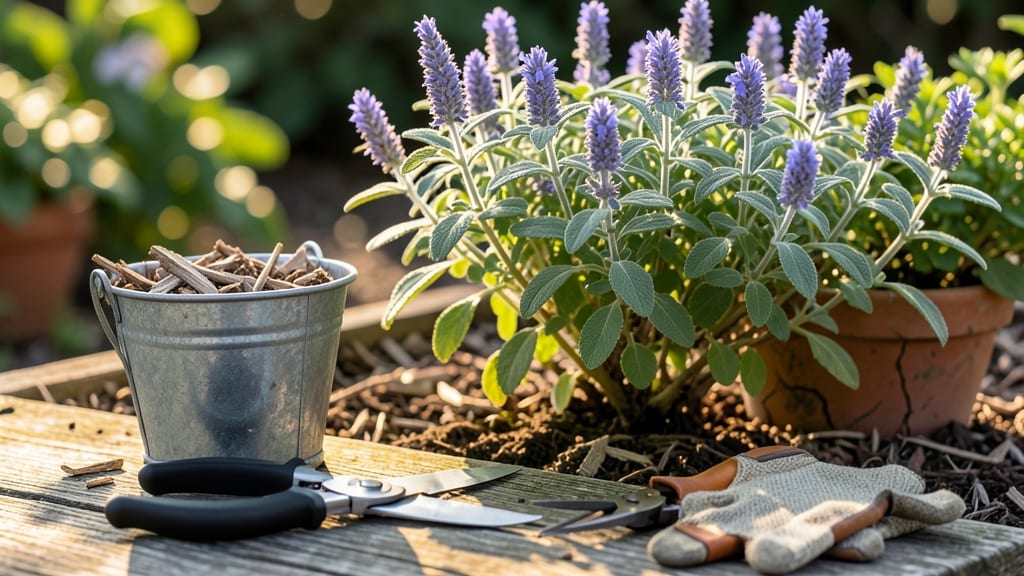
Pruning catmint isn't just about keeping it tidy—it's the secret to longer blooms and that signature fragrance all season. 🌿 I've learned that the right cuts at the right time turn a scraggly plant into a lush, flowering powerhouse that hummingbirds adore.
The key is understanding when to trim for shape versus when to rejuvenate for next year's growth.
Most gardeners make one of two mistakes: pruning too late in the season or cutting back too aggressively. I've seen catmint plants recover from both—but the results are dramatically different. Spring is for shaping, while early summer is when you encourage that second flush of flowers.
And yes, you can even do light maintenance in fall, though it depends on your climate zone.
With just a few sharp pruners and 20 minutes, you'll transform your catmint from a floppy mess into a bushy, fragrant beauty. The before-and-after is shocking—think dense silver foliage and clouds of lavender blooms instead of sparse stems. Plus, you'll attract more pollinators than you can count.
This method works for both Nepeta racemosa and Nepeta faassenii, whether planted in the ground or containers. The same principles apply whether you're dealing with a single plant or a whole border. Here's how to do it right—no more guesswork, just consistent results.
Understanding catmint’s growth triggers
Catmint’s lush, fragrant foliage and blooms don’t just happen by chance—they’re the result of natural growth cycles, environmental cues, and human intervention. If your catmint isn’t thriving, it’s often because these triggers aren’t being met.
Below, we break down the key reasons why catmint behaves the way it does—and how to work with (or correct) its instincts for healthier, longer-lasting plants.
Catmint is a perennial with a built-in survival strategy: it grows aggressively to maximize photosynthesis and energy storage. Without pruning, it produces long, leggy stems and fewer blooms because:
- Hormonal dominance: Auxins, a plant growth hormone, accumulate at the tips of stems. These hormones suppress side shoots and flower buds lower down, leading to a "bamboo-like" structure. Think of it like a tree growing taller instead of wider—it’s prioritizing height over bushiness.
- Resource competition: The plant diverts energy to support vertical growth rather than dense foliage or flower production. This is why your catmint might look tall but sparse.
- Light deprivation: Dense, unpruned growth can shade lower leaves, reducing photosynthesis. The plant then focuses on stretching upward for more light, accelerating legginess.
Actionable fix: Prune back 1/3 of the plant’s height in early spring to reset auxin dominance and encourage bushier, flower-rich growth.
Catmint follows a biennial growth pattern, meaning it has two main phases of activity:
- Spring flush: After winter dormancy, the plant sends out new growth from its base. This is its primary blooming window—if you prune too early, you risk cutting off flower buds before they open.
- Summer/fall regrowth: After the first bloom cycle, catmint may produce a secondary flush of flowers if given the right conditions (sun, water, and nutrients). However, if it’s stressed (e.g., drought or heat), it may go dormant prematurely.
Why it matters: Pruning at the wrong time—like mid-summer—can trigger a false dormancy because the plant interprets the cut as a signal to conserve energy for winter. This leads to stunted growth and fewer blooms the following year.
Actionable fix: Time pruning to just after the first bloom cycle (late spring/early summer) to avoid disrupting the plant’s natural rhythm.
Catmint is hardy, but it’s not invincible. When environmental conditions stray from its preferences, it reacts by altering its growth priorities. Common stress triggers include:
| Stress Factor | Plant’s Response | Result |
|---|---|---|
| 🌞 Too much shade | Stretches stems toward light (etiolation) | Leggy, weak growth; sparse blooms |
| 💦 Overwatering | Roots suffocate; fungal growth | Yellowing leaves; stunted growth |
| 🔥 Drought or heatwave | Enters survival mode; drops buds | Premature dormancy; fewer flowers |
| 🌍 Poor soil drainage | Roots struggle to absorb nutrients | Wilting; slow regrowth after pruning |
Why it happens: Catmint is drought-tolerant but not a swamp plant. When stressed, it prioritizes root and leaf preservation over flowering—a survival tactic that can leave your garden looking sparse.
Actionable fix: Ensure well-draining soil and moderate watering (1 inch per week). Mulch to retain moisture without soggy roots.
Even well-intentioned pruning can backfire if it violates catmint’s growth rules. Common errors include:
- Pruning too late: Cutting back after the first frost signals the plant to stop growing entirely, reducing next year’s bloom potential.
- Over-pruning: Removing more than 1/3 of the plant in one session can shock the roots, leading to slow recovery or dieback.
- Incorrect cuts: Pruning too close to the base removes next year’s growth buds (located at the stem’s base). Aim to leave 1/2 inch above a leaf node.
- Ignoring deadheading: Letting spent blooms seed can exhaust the plant’s energy, reducing secondary flushes.
Actionable fix: Follow the “one-third rule”: Never remove more than 1/3 of the plant’s height in a single session. Use clean, sharp shears to make cuts at a 45-degree angle just above a leaf node.
By understanding these triggers, you can work with catmint’s natural instincts—not against them—to keep it blooming, fragrant, and full of life year-round. 🌿✨
Revive Your Catmint with Proven Tricks
Catmint thrives when pruned correctly, but even the best gardeners can face challenges like leggy growth, sparse blooms, or woody stems. The good news? Most issues have simple fixes—and a few tweaks can keep your catmint looking lush for years.
Below, we break down common problems and the step-by-step solutions to get your plant back on track, plus prevention tips to avoid future headaches.
If your catmint has stretched tall and sparse, it’s begging for a hard prune. Leggy growth usually happens from lack of pruning, too much shade, or over-fertilizing with nitrogen (which promotes leafy growth over flowers).
🔪 How to Fix It:
- Wait for the Right Time 📅
- Prune right after the first flush of blooms (early summer) to encourage a second, more robust flowering.
- Avoid cutting back after the first frost—this can leave stems vulnerable to winter dieback.
- Cut Back by 1/3 to 1/2 ⏰
- Use clean, sharp pruners (or shears) to trim stems back to just above a set of healthy leaves or buds.
- For severely leggy plants, don’t be afraid to cut back harder than usual—catmint is resilient and will bounce back.
- Shape It Up ✂️
- Remove any dead, crossing, or weak stems to improve airflow and sunlight penetration.
- Give the plant a rounded or mound shape for a fuller look.
💡 Prevention Tips:
- Pinch back young plants in early spring to encourage bushier growth.
- Plant in full sun (6+ hours daily) to prevent stretching.
- Use a balanced fertilizer (low in nitrogen) in spring to promote blooms over foliage.
If your catmint is all leaves and few (or no) flowers, it’s likely due to over-pruning too late in the season, poor sunlight, or excessive nitrogen. Catmint blooms best when given the right signals to focus on flowers, not just foliage.
🌺 How to Fix It:
- Prune at the Right Time ⏳
- Avoid heavy pruning after mid-summer—this can remove next year’s flower buds.
- Instead, do a light trim after the first bloom cycle to coax a second round of flowers.
- Boost Sunlight & Airflow ☀️
- Move the plant to a sunnier spot if possible (catmint loves full sun).
- Thin out crowded stems to reduce humidity around the plant, which can deter blooming.
- Fertilize Correctly 🌿
- Switch to a low-nitrogen, high-phosphorus fertilizer (like 5-10-5) in early spring to encourage blooms.
- Avoid rich compost or manure, which can promote leafy growth at the expense of flowers.
💡 Prevention Tips:
- Deadhead spent blooms regularly to redirect energy into new flowers.
- Avoid pruning in fall—let the plant rest and store energy for next year.
- Mulch lightly in spring to retain moisture without smothering the plant.
Mature catmint plants can develop woody, leafless stems at the base, especially if they’ve been neglected for years. While this isn’t deadly, it can make the plant look unsightly. The fix? A rejuvenation prune to stimulate new growth.
🔥 How to Fix It:
- Prune Back Hard in Early Spring ❄️
- Cut back all stems to within 2–4 inches of the ground (just above a healthy bud or leaf set).
- This may look drastic, but catmint will regrow quickly from the base.
- Remove Old Wood 🪓
- If some stems are completely woody and dead, snip them off at the base.
- Healthy stems will have green pith inside—if it’s brown and dry, it’s time to go.
- Give It Time to Recover ⏳
- Water deeply after pruning to help the plant establish new roots.
- Expect new growth in 2–4 weeks, especially if the plant is otherwise healthy.
💡 Prevention Tips:
- Prune annually to prevent stems from becoming too woody.
- Divide older clumps every 3–4 years to refresh the plant and remove dead wood.
- Avoid heavy pruning in fall—save the hard cuts for early spring.
While catmint is generally pest-resistant, aphids, spider mites, or fungal issues (like powdery mildew) can sometimes strike, especially in humid conditions. Early intervention is key to keeping your plant thriving.
🛡️ How to Fix It:
- Identify the Problem 🔍
- Aphids/spider mites? Look for sticky residue (honeydew) or tiny webs on leaves.
- Powdery mildew? Check for white, powdery spots on foliage.
- Treat Gently but Effectively 🚿
- For pests: Spray with a soapy water solution (1 tsp mild dish soap + 1 quart water) or introduce beneficial insects like ladybugs.
- For mildew: Remove affected leaves and apply a fungicide (neem oil or baking soda spray: 1 tbsp baking soda + 1 quart water + a drop of soap).
- Improve Airflow & Light 💨
- Thin out crowded stems and space plants 18–24 inches apart to prevent humidity buildup.
- Ensure the plant gets at least 6 hours of sun daily to dry leaves quickly.
💡 Prevention Tips:
- Water at the base (avoid wetting leaves) to reduce mildew risk.
- Inspect plants regularly for early signs of pests or disease.
- Rotate pruning tools between plants to prevent spreading pathogens.
Once you’ve addressed the issues, keep your catmint looking its best with these ongoing tips:
- 🌿 Light Pruning: Trim back by 1/3 after each major bloom cycle (spring and summer) to encourage continuous flowering.
- 🌡️ Winter Prep: In late fall, cut back stems by half and mulch lightly to protect roots in cold climates.
- 💧 Water Wisely: Catmint is drought-tolerant, but water deeply once a week during dry spells to establish roots.
- 🌱 Divide Every Few Years: Split clumps in early spring to rejuvenate the plant and share with fellow gardeners!
With these solutions, your catmint will be bushier, blooming longer, and fragrant all season—no more sad, leggy plants in sight! 🌼
Frequently asked questions
When is the best time to prune catmint for maximum blooms?
For longer flowering, prune twice a year: first in early spring (just as new growth emerges) to shape the plant, and again after the first bloom cycle (late spring/early summer) to encourage a second flush. Avoid pruning in fall—this can reduce next year's blooms.
Can I prune catmint too much? What happens if I cut back too aggressively?
Yes! Never remove more than 1/3 of the plant's height in one session. Cutting back too hard can shock the plant, leading to slow recovery or even dieback. For severely leggy plants, do a hard prune in early spring, but never after the first frost. Always leave 1/2 inch above a leaf node to encourage new growth.
How do I prune catmint in containers vs. garden beds?
The techniques are identical, but container-grown catmint needs more frequent attention. For pots, trim back by 1/3 after each bloom cycle to maintain shape and encourage bushiness. In garden beds, you can prune less often since roots have more space to recover. Always use clean, sharp pruners to prevent disease spread.
What should I do if my catmint looks woody and leggy after years of neglect?
Give it a rejuvenation prune in early spring: cut all stems back to 2-4 inches above the base. Remove any completely dead wood, then water deeply. New growth should appear in 2-4 weeks. This dramatic cut stimulates fresh, bushy growth—catmint is surprisingly resilient!
Do I need special tools to prune catmint?
No! Basic sharp pruning shears or clean garden scissors work perfectly. For larger plants, bypass pruners give cleaner cuts. Always sterilize tools with rubbing alcohol between plants to prevent disease spread. Avoid dull tools—they crush stems instead of cleanly cutting them.