
Pruning
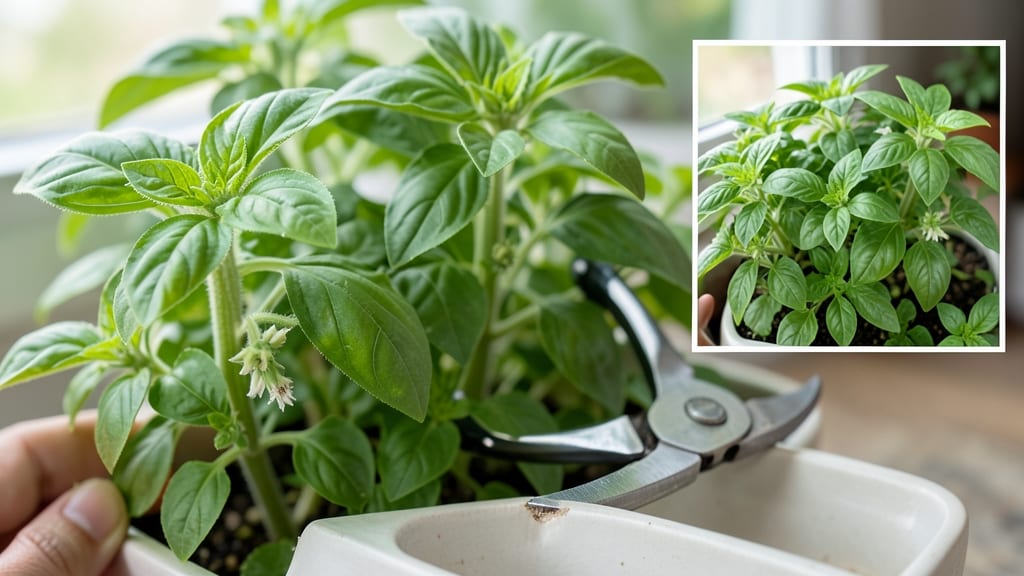
Properly pruning basil isn’t just about keeping it tidy—it’s the secret to pesto-powered harvests that last all season. 🌿 I’ve learned the hard way that skipping this step means fewer leaves, slower growth, and plants that bolt before you can enjoy them.
The right cuts encourage bushier, more productive plants while preventing common problems like yellowing leaves or woody stems.
Start pruning when your basil reaches 6 inches tall, pinching off the top sets of leaves just above a pair of lower leaves. Use clean, sharp scissors to avoid tearing stems, and always cut at a 45-degree angle to maximize surface area for new growth.
Focus on leggy stems and crowded areas—this redirects energy to produce more leaves, not just flowers.
You’ll see the difference within two weeks: thicker stems, more leaf production, and plants that stay compact rather than stretching toward the sun. Regular pruning also delays flowering, which means more harvestable leaves for your pesto, salads, and pasta dishes.
The key is consistency—prune every 2-3 weeks during the growing season.
Common mistakes include pruning too late (when flowers form) or using dull tools (which crush stems). If your basil starts flowering, cut those buds immediately to redirect energy back to leaf growth. With the right technique, your plants will reward you with lush, flavorful leaves for months—no store-bought pesto needed.
📚 In This Guide
- What you need
- Instructions
- Tips and common mistakes
- Wrapping up and next steps
What you need
- ● Sharp pruning shears or scissors – Clean, sterilized (bypass pruners work best; avoid dull tools that crush stems). Quantity: 1 pair.
- ○ Gloves (optional but recommended) – Nitrile or gardening gloves to protect hands from sap and dirt. Quantity: 1 pair.
- ● Containers or jars for clippings – Small bowls, mason jars, or a bucket to collect pruned leaves (great for pesto or compost!). Quantity: 1–2.
- ● Water spray bottle – For misting leaves before/after pruning to reduce stress. Quantity: 1.
- ○ Ruler or measuring tape (optional but handy) – To check stem lengths if you’re aiming for precise pruning. Quantity: 1.
- ● Healthy, mature basil plant – At least 6–8 inches tall with 4–6 true leaves (young plants need time to establish!).
- ● Morning sunlight or partial shade – Prune in the early morning to avoid wilting and give plants time to recover.
- ● Knowledge of basil’s growth habit – Familiarize yourself with stem nodes (the bumps where leaves grow) to encourage bushier growth.
Step-by-Step instructions for pruning basil
Here’s how I keep my basil bushes lush, productive, and ready for pesto—no overgrowth, no leggy stems, just steady harvests.
✂️ Step 1: Identify the Right Time and Tools
Prune basil every 2-3 weeks throughout the growing season, starting when the plant reaches 6 inches tall and has at least 3-4 pairs of leaves. I use clean, sharp pruning shears or even my fingers for smaller cuts—dull tools crush stems and invite disease. The best time is morning after dew has dried, when the plant is hydrated but not wilting.
Look for the top two sets of leaves—these mark where to pinch. Avoid cutting into woody stems; you want to keep the plant soft and leafy. If your basil has already flowered, prune the blooms immediately—they signal the plant to stop producing leaves and focus on seeds, which ruins your harvest.
✂️ Step 2: Pinch Above Leaf Nodes for Bushier Growth
Use your thumb and forefinger to pinch off the stem just above a leaf node (the point where leaves attach to the stem). This encourages the plant to branch out rather than grow tall and spindly. I always pinch at a 45-degree angle to reduce water pooling, which prevents rot. You’ll see new side shoots emerging within 7-10 days—that’s your reward for proper pruning.
If your basil has already bolted (sent up a flower stalk), cut the entire stalk back to 4-6 inches above the soil line. Don’t worry—it may take a few weeks to recover, but with consistent care, it’ll bounce back with fresh growth. Avoid pruning more than ⅓ of the plant at once; drastic cuts shock the plant and slow down regrowth.
☀️ Step 3: Maintain Light and Water After Pruning
After pruning, move the plant to a spot with 6+ hours of bright, indirect light—basil needs plenty to recover and grow back leafy. If your basil was in full sun before, it’ll still need that, but newly pruned plants benefit from a day or two of slightly gentler light to avoid stress. You’ll notice leaves perk up faster if they’re not fighting for light.
Water the plant deeply 24 hours after pruning to help it recover. Stick your finger 1 inch into the soil—if it’s dry, water until moisture reaches that depth. Avoid overhead watering for a day or two; it can introduce fungal spores to fresh cuts. Instead, water at the base to keep the foliage dry and healthy.
🌱 Step 4: Harvest Regularly to Encourage Continuous Growth
Once your basil has bushier growth, start harvesting leaves from the outer edges of the plant. This prevents overcrowding and encourages new growth from the center. I like to harvest 1-2 leaves at a time from multiple stems—never take more than ⅓ of the plant in one session. Use clean scissors or your fingers to avoid tearing the stems.
If your basil starts to look leggy again (stems stretching toward light with sparse leaves), it’s time to prune again. The key is consistency—basil responds best to regular maintenance. You’ll know you’re doing it right when your plant stays compact, green, and productive, rather than bolting or becoming woody. A well-pruned basil plant can keep producing for 3-4 months with proper care.
Tips & tricks for perfect basil pruning
Between us, these small details make all the difference between a basil plant that thrives and one that fizzles out. Here's what nobody tells you about keeping your basil bushy and productive.
Timing Secret: The 2-3 week pruning schedule is non-negotiable for pesto production. Basil grows fastest in warm weather, so during peak summer months, you might need to prune every 2 weeks consistently. I've learned this the hard way—skipping even one pruning session lets the plant get leggy, and you lose that perfect leaf-to-stem ratio we all want for pesto.
Technique Tip: When pinching above leaf nodes in Step 2, focus on creating a 45-degree angle cut. This isn't just about looks—it prevents water from pooling in the stem, which would otherwise create perfect conditions for rot. I always demonstrate this to new gardeners by showing how water beads up differently on angled versus straight cuts. The difference in plant health after just one pruning session is noticeable.
Recovery Strategy: That 24-hour watering window after pruning is your plant's chance to recover. I've seen basil plants completely wilt after aggressive pruning only to bounce back beautifully when given this recovery period. The key is the deep watering—stick your finger 1 inch down and soak until moisture reaches that depth. This encourages strong root growth which supports the new shoots you're encouraging with your pinching.
Harvesting Wisdom: Remember, you're harvesting from the outer edges to encourage new growth from the center. This might feel counterintuitive at first, but think of it like haircuts—you want to shape from the outside in. I've found that harvesting 1-2 leaves at a time from multiple stems gives me the fresh basil I need for pesto while keeping the plant balanced. The goal is to maintain that compact, bushy shape that produces the most leaves per square inch.
Pro Tips for Properly Prune Basil
- Between us, these small details make all the difference between a basil plant that thrives and one that fizzles out. ...
- Timing Secret: The 2-3 week pruning schedule is non-negotiable for pesto production. Basil grows fastest in warm weat...
- Technique Tip: When pinching above leaf nodes in Step 2, focus on creating a 45-degree angle cut. This isn't just abo...
Frequently asked questions
Got questions about pruning basil? You’re not alone—this fragrant herb can be a little finicky! Here are answers to the most common concerns to keep your basil thriving and your pesto game strong.
How often should I prune basil?
Prune basil every 2–3 weeks during its growing season (spring to fall) to encourage bushy growth. Focus on pinching off the top sets of leaves (about ½ inch above a leaf node) to promote branching. Over-pruning can stress the plant, while under-pruning may lead to leggy, sparse growth.
When is the best time of day to prune basil?
Morning is ideal—prune basil in the early morning when temperatures are cool and humidity is high. This reduces stress on the plant and gives it time to recover before the heat of the day. Avoid pruning in the evening, as damp leaves may invite fungal issues.
What should I do if my basil turns yellow after pruning?
Yellowing leaves after pruning usually mean over-pruning or underwatering. Check the soil moisture—basil prefers consistently damp (not soggy) soil. If the yellowing is localized to lower leaves, it’s normal (older leaves shed). For widespread yellowing, reduce pruning frequency or adjust watering habits.
Can I prune basil too much?
Yes! Pruning more than ⅓ of the plant at once can shock basil, leading to stunted growth or even death. Stick to light, regular pinching (removing just the top sets of leaves) to avoid over-stressing it. Think of it like giving your basil a haircut—small trims keep it lush!
What can I do with basil prunings?
Don’t toss those clippings! Use them for:
- Fresh pesto (chop and blend with garlic, nuts, and olive oil).
- Herb-infused oils (steep in olive oil for 1–2 weeks).
- Rooting in water (place stems in a jar; new roots form in 1–2 weeks!).
- Compost (if pest-free).
Wrapping up and next steps
Pruning basil isn’t just about keeping your plant tidy—it’s the secret to bursting, flavorful growth and a never-ending supply of fresh leaves for your favorite dishes! Remember to pinch regularly, use clean tools, and avoid over-trimming to keep your basil thriving.
With just a little care, you’ll have a lush, productive plant that rewards you with bold, aromatic leaves all season long. 🌿
Now that you’re a pruning pro, why not harvest and use your basil? Try making homemade pesto, tossing leaves into salads, or gifting a pruned plant to a fellow gardening enthusiast. Happy growing—and enjoy that pesto-powered flavor! 🍅🌱