
Pruning
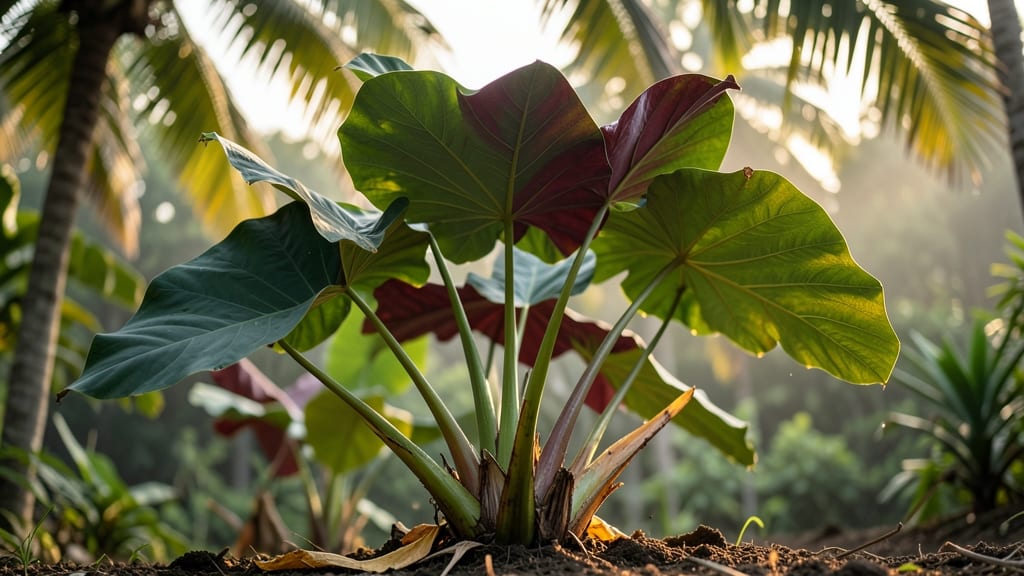
Want lush, oversized elephant ear foliage that steals the show in your garden? Mastering seasonal pruning transforms these tropical plants from modest to magnificent. These 10 expert cuts reveal the secrets to doubling leaf size and extending your plant’s prime display.
Springtime Flush Cut Revival
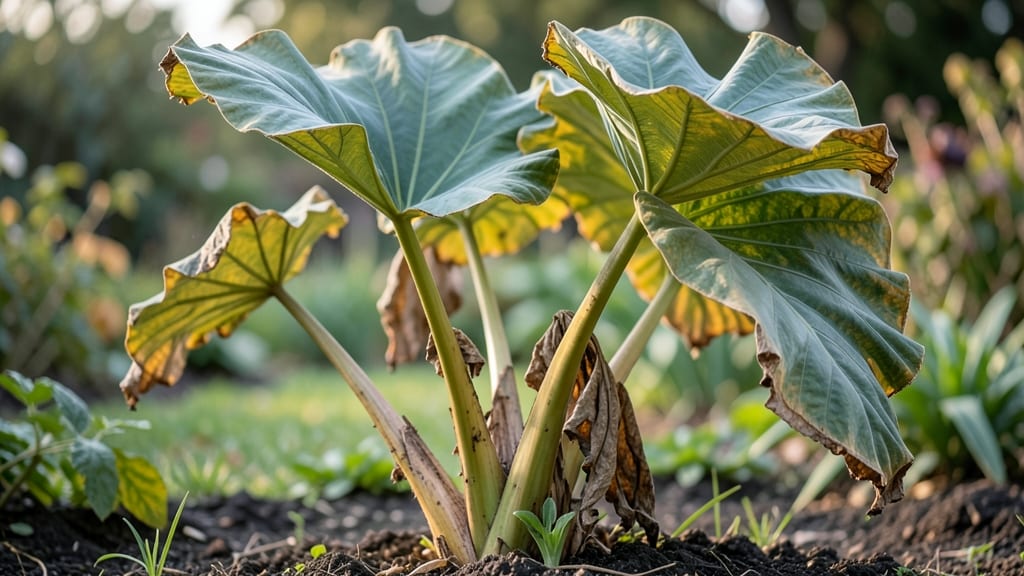
Your elephant ear plants (Colocasia or Alocasia) might look wilted after winter, but a springtime flush cut is the secret to reviving them. This technique removes last season’s dead growth while signaling the plant to focus energy on fresh, vibrant foliage—perfect for gardeners eager to see dramatic regrowth.
Start by cutting back all yellowed or damaged leaves at the base, using sterilized pruners to avoid disease. Trim just above a healthy bud or node to encourage new shoots. For container-grown plants, this cut also prevents overcrowding, allowing roots to access nutrients more efficiently. Follow up with a balanced fertilizer to support the plant’s rebound.
This method is especially valuable for gardeners in cooler climates where winter dormancy slows growth. By early April (or when nighttime temps stay above 50°F), your plants will reward you with bold, oversized leaves—transforming tired foliage into a showstopper. 🌱
Summer Leaf Size Maximizer
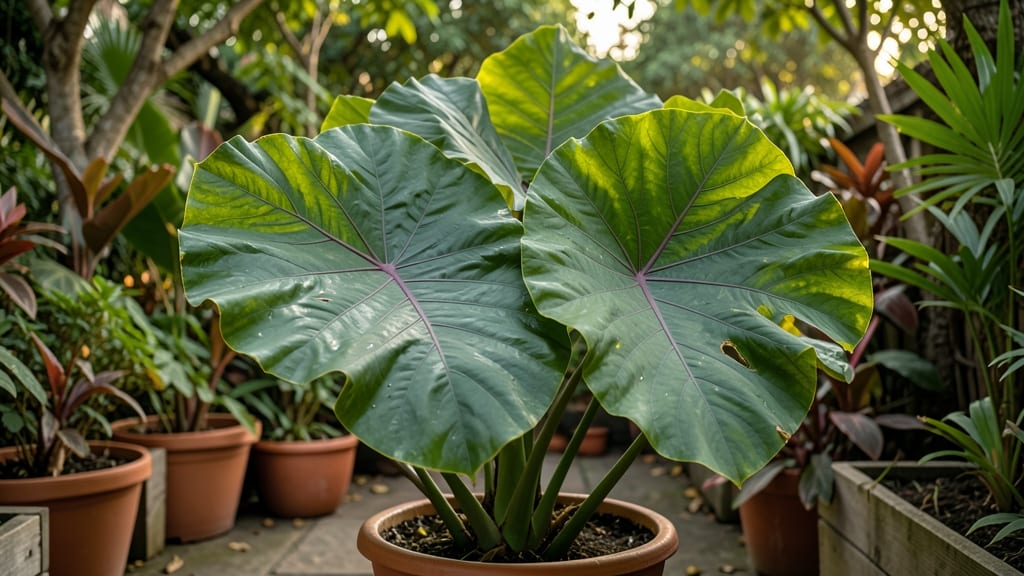
Mid-summer is the perfect time to transform your elephant ear plant from ordinary to show-stopping. By pinching back the growing tips when leaves reach about 6 inches, you force the plant to redirect its energy into producing broader, thicker leaves—ideal for container gardens where space is limited.
Use clean, sharp pruning shears or your fingers to snip just above a leaf node. This simple technique works best on rapid-growing varieties like Colocasia and Alocasia, which respond dramatically to this growth hack. Container plants benefit most since they have less root space to support large foliage naturally.
This method is especially valuable for gardeners with small patios or balconies who want maximum impact from limited square footage. Just be sure to fertilize lightly after pruning to support the new leaf growth. 🌿
Deadhead and Defoliate Method
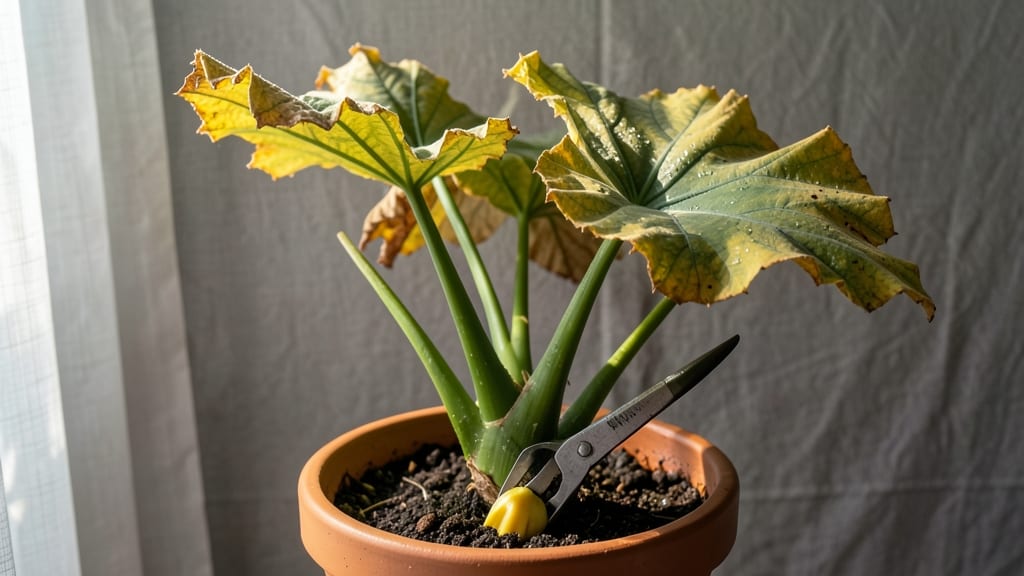
When your elephant ear plant looks tired with yellowed or tattered leaves, don’t just trim the top—this deadhead and defoliate method targets the problem at its source. By cutting off damaged foliage at the base (where it meets the crown), you prevent fungal diseases from spreading while giving your plant a fresh start.
Use clean, sharp shears to snip leaves all the way down to the soil line, avoiding any lingering debris. This technique forces the plant to redirect energy into new, healthy growth from the crown rather than wasting resources on decaying leaves. It’s especially effective for neglected plants that need a full reset before summer’s peak growth.
Gardeners with overcrowded beds or container plants will see the biggest improvement—this method creates space for larger leaves and prevents future stress. Try it mid-spring for a dramatic turnaround! 💚
Fall Stem Thinning Technique
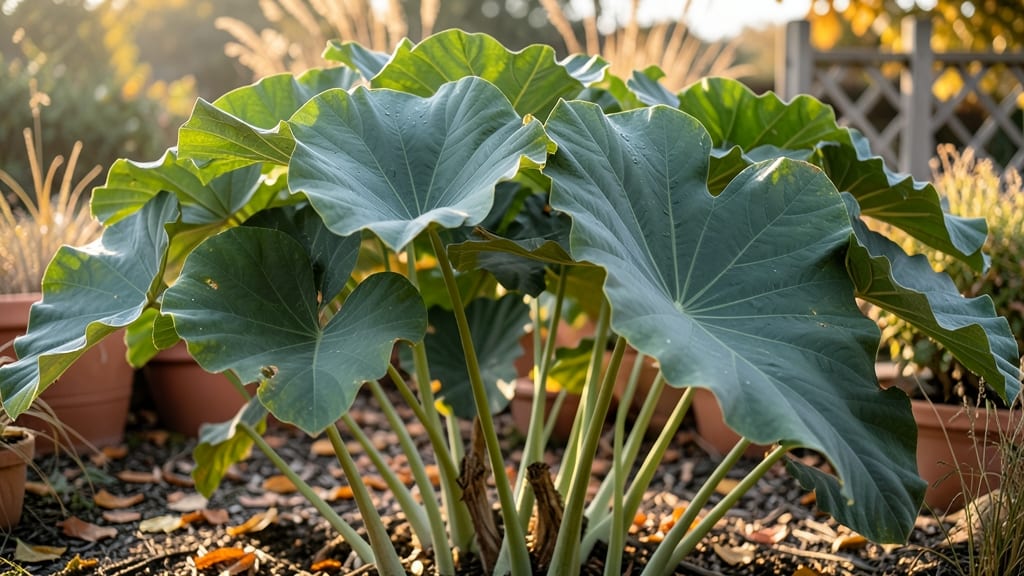
As autumn’s crisp air signals the end of the growing season, your elephant ear plants may look dense but exhausted—perfect timing for this fall stem thinning technique. This method isn’t about drastic cuts; it’s about strategic spacing to let your plant breathe, reducing moisture retention that leads to winter rot in cooler climates.
Start by identifying the strongest, healthiest stems—keep these while removing weaker ones at the base. Aim for 10-15% fewer stems overall, focusing on those crowding the center. Use sterilized pruners to make clean cuts just above a leaf node, and avoid leaving stubs. This improves air circulation, reduces fungal risks, and helps the plant store energy efficiently for spring.
Gardeners in USDA zones 5-8 will see the biggest benefits, as thinner stems are less likely to trap moisture during damp winters. It’s also a great time to assess your plant’s structure—this technique works wonders for container-grown elephant ears too. 🌟
Winter Crown Pruning for Survival
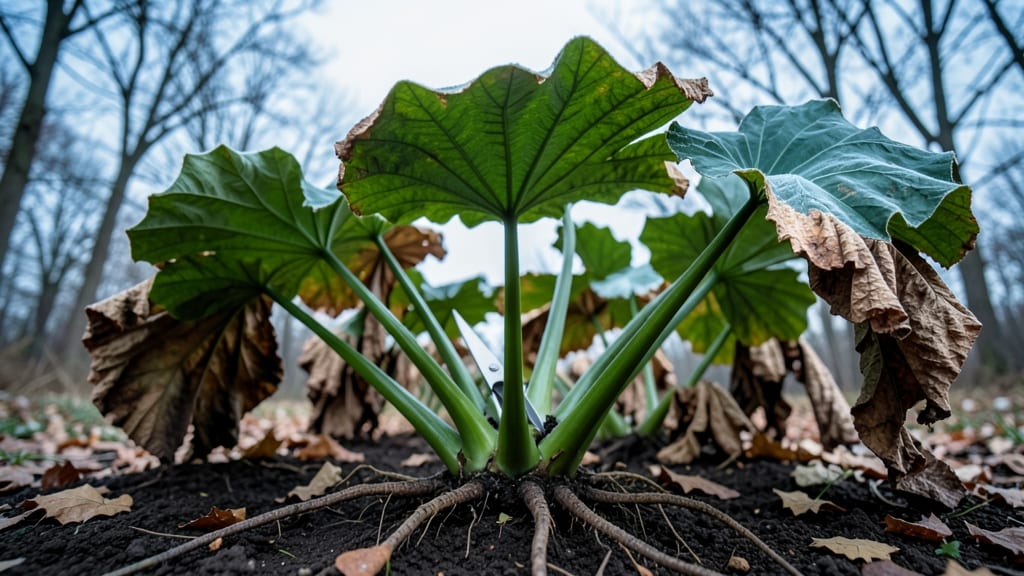
Cold snaps can turn your elephant ear plant into a frost victim—but a simple late-winter trim keeps it thriving. By cutting back one-third of the foliage in February or March, you protect the crown from damaging freezes while preserving the energy stored in the roots for spring’s comeback.
Use clean, sharp shears to remove the oldest, most damaged leaves at the base, focusing on stems that are brown or brittle. This reduces moisture loss and prevents rot, which is especially critical for zone 7 gardens where winter temperatures can fluctuate. The remaining leaves will shield the crown from harsh winds, and the plant will redirect its energy into producing larger, healthier foliage once temperatures rise.
This technique is a game-changer for gardeners in colder climates, ensuring your elephant ears return bigger and bolder each season. It’s also perfect for container plants that need extra protection from winter’s chill. 💪
Leaf Shape Enhancement Cut
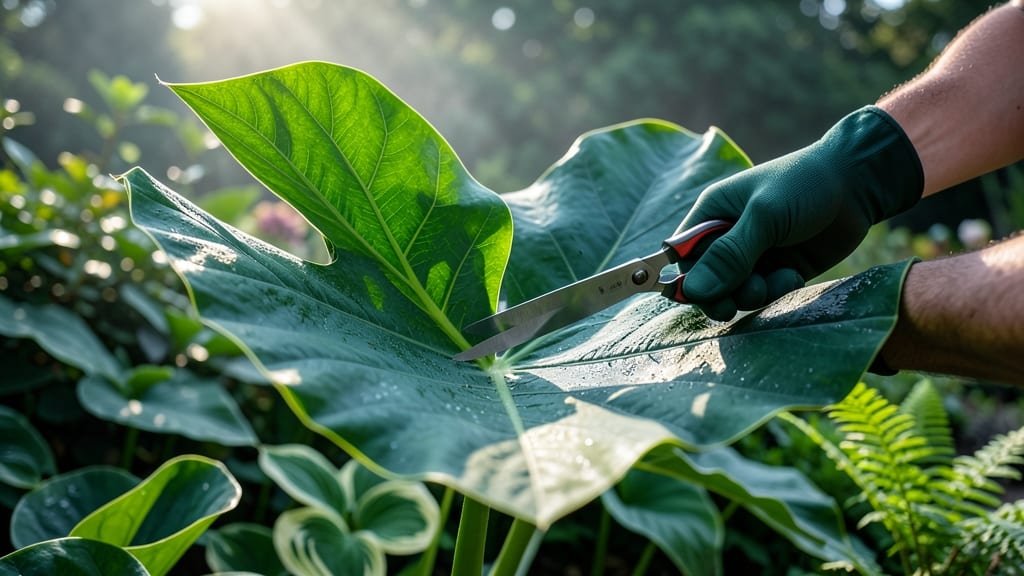
Transform your elephant ear plant into a showstopper with the Leaf Shape Enhancement Cut—a precise technique to sculpt bold, symmetrical foliage perfect for formal gardens. Unlike other pruning methods, this approach focuses on refining leaf structure rather than just size or health.
Start by identifying the smaller side shoots emerging along the main stems. Use sharp, sterilized shears to trim these off just above a leaf node, redirecting the plant’s energy toward producing larger, more uniform leaves. Repeat this process every 4-6 weeks during the growing season, always prioritizing the strongest central leaves. This method works best on mature plants with established growth patterns.
Gardeners who love structured plantings—like those designing wedding venues or formal garden beds—will find this cut invaluable. The result? Stunning, showcase-worthy foliage that commands attention without sacrificing the plant’s natural beauty. 💚
Bloom Sacrifice Pruning
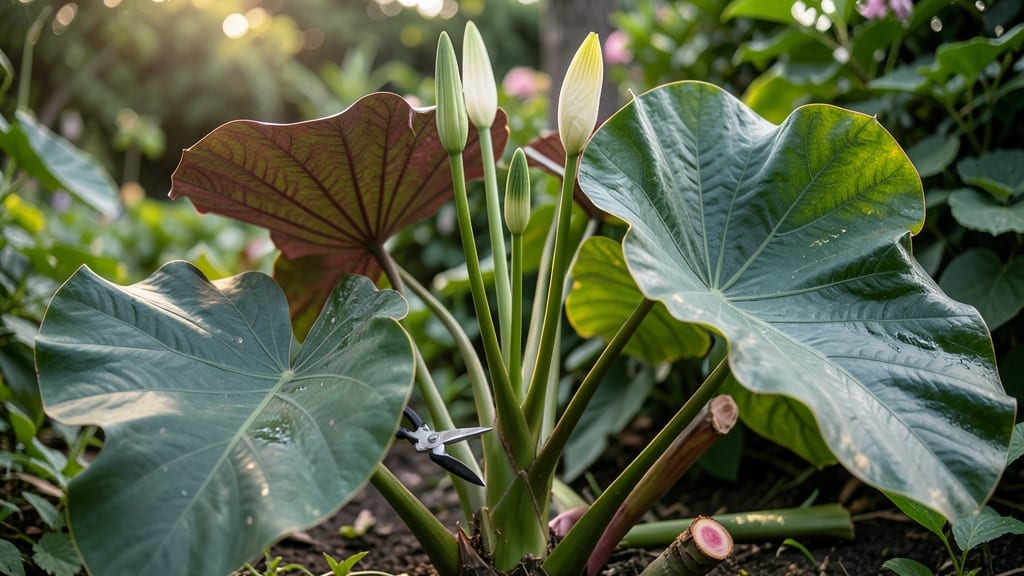
If your elephant ear plants produce flowers but you’re more interested in their dramatic foliage, this pruning technique is your secret weapon. By removing flower stalks early, you’ll redirect the plant’s energy toward producing larger, more vibrant leaves—perfect for creating a bold statement in your garden.
Start by identifying and snipping off flower stalks as soon as they appear, using clean, sharp pruners. This method works best during the active growing season (spring to early summer) when the plant has ample energy to focus on leaf production. You’ll notice leaves becoming broader and more robust within a few weeks, making them the star of your garden beds or containers.
This approach is ideal for gardeners who prioritize foliage over blooms, especially those designing tropical-themed gardens or using elephant ears as architectural focal points. The trade-off of skipping flowers is worth it for the stunning, oversized leaves you’ll enjoy all season. 🌻
Root Zone Stimulation Cut
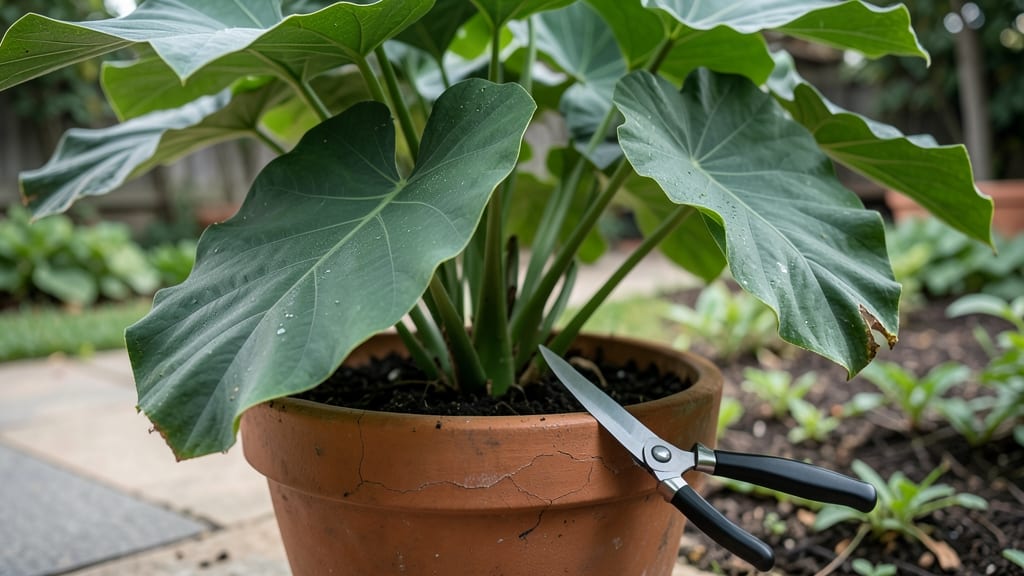
If your container-grown elephant ears seem cramped or underperforming, a root zone stimulation cut is your secret weapon. This technique involves pruning just above the soil line to trigger a surge in root development and encourage bushier, more vigorous growth—ideal when repotting or refreshing crowded pots.
Use clean, sharp shears to make a precise cut about 1-2 inches above the soil surface, removing any old or damaged foliage at the base. This redirects the plant’s energy downward, strengthening roots while promoting multiple new shoots from the crown. For best results, perform this cut in early spring before active growth begins, or after repotting to minimize stress. Container gardeners will notice larger leaves and sturdier stems within weeks.
This method works wonders for elephant ears that outgrow their pots, giving them a fresh start without the trauma of harsh pruning. Perfect for urban gardeners with limited space or anyone wanting to maximize their plant’s potential! 💪
Disease Prevention Pruning
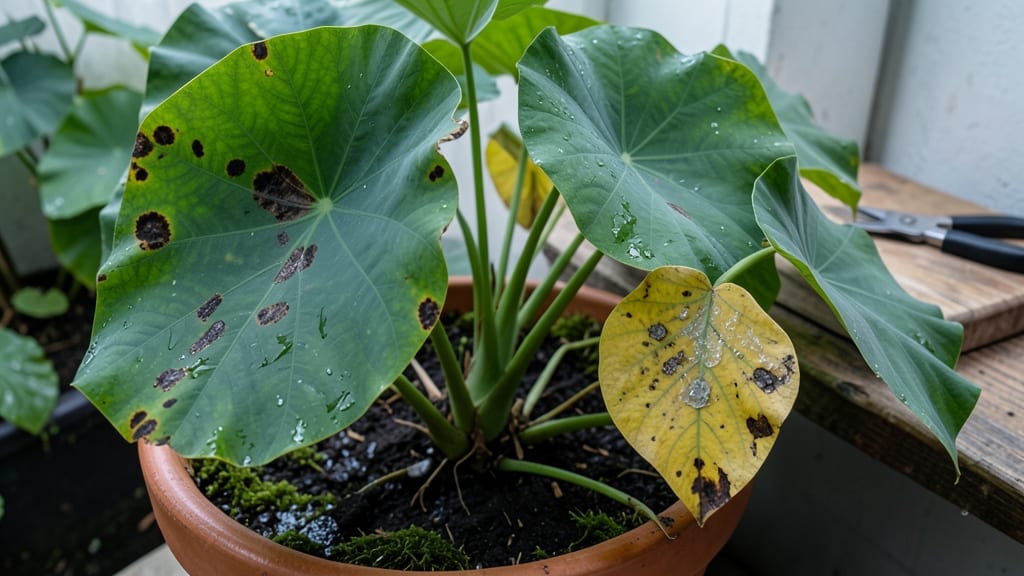
Humid climates turn your elephant ear plants into fungal magnets—but a preventive pruning routine can stop disease before it starts. The key is acting fast when you spot the first signs of black spots, yellowing, or slimy growth on leaves, which are classic fungal red flags.
Always use sterilized pruners (wipe blades with rubbing alcohol between cuts) and remove infected leaves at the base of the stem to prevent spores from spreading. Bag and discard diseased foliage immediately—never compost it. For extra protection, spray nearby healthy leaves with a copper fungicide after pruning to create a protective barrier.
This method is a game-changer for gardeners in zones 8-11, where humidity and heat create perfect conditions for fungal outbreaks. With consistent hygiene, your plants will stay vibrant and disease-free all season long. ✨
Seasonal Growth Reset Pruning

Tropical climates never get a true "off-season"—so why should your elephant ear plants? This seasonal growth reset technique works like a software reboot for your foliage, clearing out old growth to make way for fresh, vibrant leaves year-round.
At the start of each season (spring, summer, and fall), cut back one-third of the plant—including any leggy stems or yellowing leaves—using clean, sharp shears. This shock treatment forces the plant to redirect energy into producing larger, healthier leaves instead of maintaining weak growth. For container plants, this method also prevents overcrowding and improves airflow.
Perfect for gardeners in zones 10-12 or those growing elephant ears in pots, this approach keeps your display lush and dynamic without the stress of constant pruning. Your plants will thank you with bold, oversized foliage that turns heads all year. 🌿