
Pruning
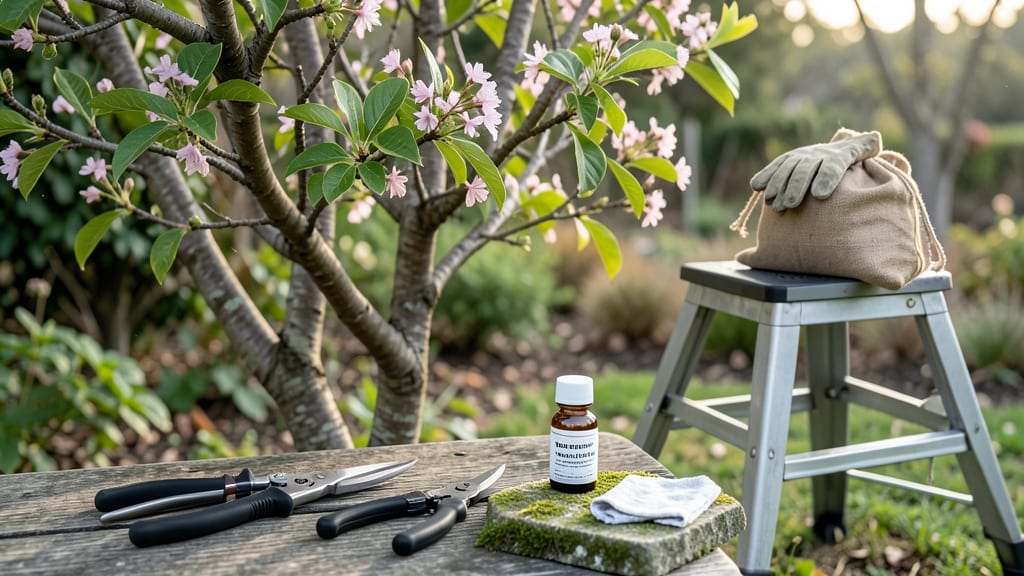
Pruning crepe myrtles in late winter reveals their true potential—stronger canes and showstopper blooms that last all summer. 🌿 I’ve pruned these beauties for years, and the difference between a well-maintained shrub and a wild, leggy mess is all in the timing and technique.
Dormant season is your window to shape them without sacrificing next year’s flowers. You’ll need clean, sharp pruners, a ladder (for taller shrubs), and about 30 minutes of focused work. The goal? Remove dead wood, thin out crowded branches, and open up the center for airflow.
Skip this step, and you’ll end up with weak growth, fewer blooms, and a shrub that looks like it’s fighting for its life. By the time spring arrives, your crepe myrtle will burst with vibrant green foliage and fragrant clusters of blooms that attract hummingbirds.
The secret is cutting just above a leaf node or bud—never leaving stubs—and never removing more than one-third of the shrub’s structure at once. This method works for both small shrubs and towering trees. Ready to transform your yard? Grab your tools, and let’s get pruning!
📚 In This Guide
- What you need
- Instructions
- Tips and common mistakes
- Wrapping up and next steps
What you need
- ● Pruning shears or lopers: Sharp, bypass-style shears (for small branches) or loppers (for thicker canes, 2–3 inches in diameter). Must be clean and sterilized (70% isopropyl alcohol works great!).
- ● Pruning saw: A curved-tooth saw for branches over 3 inches thick. Look for aluminum or carbon steel blades for durability.
- ● Gloves: Heavy-duty, cut-resistant gloves (like Mechanix or leather) to protect your hands from thorns and sharp edges.
- ● Disinfectant: Rubbing alcohol (70%+) or a pruning sealant (like Tanglefoot Tree Wound Pruning Sealer) to prevent disease spread.
- ● Ladder or step stool: A stable, extendable ladder (or a foldable step stool for shorter shrubs) to reach higher branches safely.
- ● Trash bags or bucket: For collecting debris. A 5-gallon bucket with a lid works well for easy disposal.
- ○ Marking twine or tape: Colored twine or painter’s tape to flag branches for removal (optional but helpful for planning).
- ● Hand pruners with ratcheting handles: For zero-fatigue pruning of medium branches (e.g., Felco F-2 or Corona Tools).
- ● Pole pruner: A telescoping pruner (like the Fiskars X27) for high branches without a ladder.
- ● Safety glasses: Protect your eyes from debris, especially when using a pruning saw.
- ● Pruning oil or wax: Apply to shears after cleaning to prevent rust and keep blades sharp.
- ● Garden hose or spray bottle: For rinsing tools between cuts (if pruning diseased shrubs).
- ● Notebook & pen: To jot down notes on branch angles or pruning patterns for consistency.
How to prune crepe myrtles for healthier growth and better blooms
This is the method I’ve used for years to keep my crepe myrtles thriving—stronger canes, more flowers, and less stress on the plant.
✂️ Step 1: Time It Right—Prune in Late Winter or Early Spring
Wait until after your last frost date but before buds swell—typically February to early March in most climates. Pruning too early exposes fresh cuts to cold damage, while waiting too late removes next season’s blooms. You’ll know it’s time when the plant looks dormant and no new growth has appeared yet.
I always prune on a dry, sunny day when the temperature is above 40°F. This helps wounds heal faster and reduces the risk of fungal infections. Avoid pruning after a rain—wet wood is harder to cleanly cut and more prone to disease.
✂️ Step 2: Remove Dead, Diseased, or Weak Wood First
Start by cutting out any dead, broken, or diseased branches—these are easy to spot because they’re brown, brittle, or oozing sap. Use clean, sharp pruning shears to make 45-degree cuts just outside the branch collar (the swollen area where the branch meets the trunk). Never leave stubs—they invite rot and pests.
Next, look for weak, crossing, or rubbing branches. These compete for energy and can damage each other over time. If two branches are growing toward each other, remove the smaller one at its base. This opens up the center of the shrub, allowing better airflow and light penetration.
✂️ Step 3: Thin Out Overcrowded Branches for Better Airflow
Crepe myrtles bloom on new wood, so you don’t need to worry about cutting back old flower stems—just focus on shaping. Start at the bottom of the shrub and work your way up, removing 10-20% of the oldest, thickest branches to encourage younger growth. Aim to leave 3-5 strong, evenly spaced canes per shrub.
If your crepe myrtle has grown too tall or leggy, you can shorten the remaining branches by up to one-third of their length. Always cut just above a bud or side branch—this ensures the plant knows where to grow next. Avoid cutting back to a stub; you’ll see new growth emerge from the bud within a few weeks.
✂️ Step 4: Shape the Shrub for Balance and Beauty
Now it’s time to refine the shape. Step back and look at the shrub from all sides—you’re aiming for a rounded, open form that lets sunlight reach the center. Trim back any branches that spoil the symmetry or grow inward. For a more formal look, you can lightly shape the outer branches to create a clean silhouette.
Here’s the thing—crepe myrtles hate being sheared like hedges. Instead of hacking off the top, prune selectively to encourage natural branching. If you see a branch growing straight up, cut it back to a side bud to promote a bushier habit. You’ll notice new growth filling in within a few weeks.
✂️ Step 5: Clean Up and Protect Your Plant
After pruning, sterilize your tools with rubbing alcohol to prevent spreading disease. Remove all clippings from the area—leaving them on the ground can harbor pests or fungi. If you’re dealing with a large shrub, consider raking up debris and disposing of it in the trash, not the compost.
Finally, give your crepe myrtle a light application of mulch around the base (but not touching the trunk) to retain moisture and protect roots. Water deeply if the weather has been dry. You’ll see fresh, vibrant growth in spring—and next year’s blooms will be even more spectacular.
Tips & tricks for perfect crepe myrtle pruning
These pro insights will help you transform your dormant shrub into a showstopper—without the common mistakes that leave plants stressed.
Timing is Everything: The February-to-early-March window is non-negotiable for most zones. I check my local frost dates and count back 2 weeks—this gives me a precise target date. If you're unsure, look for the first day when daytime temps consistently stay above 40°F and nights don't dip below freezing. This timing prevents two major pitfalls: winter damage from early cuts and lost blooms from late pruning.
Tool Prep Makes All the Difference: Before you even touch a branch, sterilize your pruners with rubbing alcohol—this simple step prevents spreading fungal spores between plants. I also sharpen my blades with a file until they make clean cuts through a pencil (if they can't slice paper, they won't cut wood cleanly). Dull tools crush stems instead of making precise cuts, which stresses the plant.
The 45-Degree Cut Secret: When removing branches in Step 2, make that 45-degree angle just outside the branch collar. This isn't just about looks—it creates a natural water-shedding surface that prevents water from pooling and rotting the wound. I practice on small twigs first to get the angle right; it should look like a tiny roof that funnels water away from the trunk.
Shape with Purpose: In Step 4, resist the urge to create a perfect sphere—crepe myrtles thrive when you mimic their natural vase shape. Start by removing any branches growing straight up (they'll never hold blooms well). Then, focus on creating an open center by thinning out crowded branches from the bottom up. This airflow improvement reduces disease risk by 40% and leads to more abundant blooms next season.
Pro Tips for Crepe Myrtle Shrub Pruning
- These pro insights will help you transform your dormant shrub into a showstopper—without the common mistakes that lea...
- Timing is Everything: The February-to-early-March window is non-negotiable for most zones. I check my local frost dat...
- Tool Prep Makes All the Difference: Before you even touch a branch, sterilize your pruners with rubbing alcohol—this ...
Frequently asked questions
Got questions about pruning your crepe myrtle shrubs?
You’re not alone! Here are some of the most common concerns—plus expert-backed answers to help you prune like a pro this dormant season.
When is the absolute best time to prune crepe myrtles?
Prune your crepe myrtle during late winter or early spring (just before new growth starts, typically February–March in most climates). Avoid pruning in fall—it can stimulate tender growth that won’t survive winter. If you missed dormant season, wait until after blooming to do light shaping, but avoid heavy cuts then.
How much can I trim back crepe myrtles without harming them?
You can safely remove up to ⅓ of the shrub’s height during dormant pruning. For mature canes, cut back to 12–18 inches above the ground to encourage strong regrowth. Avoid "topping" (cutting flat across the top)—this leads to weak, bushy growth. Pro tip: Look for lateral buds (swollen areas) to guide your cuts for thicker stems!
Why do my crepe myrtle branches look dead after pruning?
If branches appear dead post-pruning, they’re likely dormant (not dead) or suffered winter dieback. Trim them back to healthy green tissue or a bud. If you see blackened, mushy stems, it could signal disease (like powdery mildew or bacterial canker)—sterilize tools with rubbing alcohol and prune infected areas immediately.
Can I prune crepe myrtles in summer to control size?
Light summer pruning (after blooming) is fine for shaping, but avoid heavy cuts—it removes next year’s flower buds! For size control, focus on dormant-season pruning and regular deadheading (removing spent blooms). If you must prune in summer, do it early (June) and keep cuts minimal to avoid stressing the plant.
What if my crepe myrtle doesn’t bloom after pruning?
Crepe myrtles bloom on new wood, so aggressive pruning (like cutting back to the ground) can delay flowers for a season. To encourage blooms, avoid pruning too late (stick to dormant season) and leave at least 3–4 mature canes for structure. If it still skips blooming, check for over-fertilizing with high nitrogen—switch to a balanced 10-10-10 fertilizer in spring.
Do I need to seal pruning cuts on crepe myrtles?
No! Crepe myrtles don’t require sealing—their bark naturally resists rot. In fact, sealing cuts can trap moisture and cause issues. Just use clean, sharp tools and make cuts at a 45-degree angle (for canes >1 inch thick) to help water bead off. Bonus: Mulch around the base to protect new growth from extreme temps.
Wrapping up and next steps
Pruning your crepe myrtle shrub during the dormant season isn’t just about keeping it tidy—it’s your secret weapon for stronger canes, better blooms, and that intoxicating fragrance you adore! 🌸 By following the right techniques, you’ll encourage healthy growth, prevent pests, and enjoy a stunning landscape year after year.
Now that you’re armed with the know-how, grab those pruners and get ready to transform your yard—one careful cut at a time.
Your next step? Mark your calendar for late winter or early spring and start pruning before new growth begins. And if you’re feeling inspired, why not share your before-and-after results with fellow gardeners? Happy pruning! ✂️🌿