
Pruning
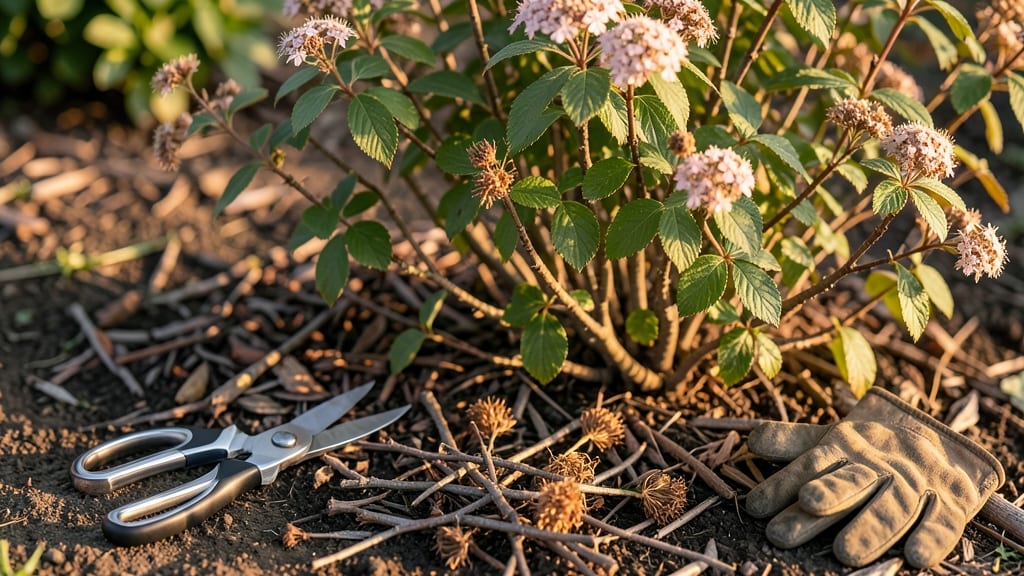
You can prune spirea in the fall, but only for late-season cleanup—avoid heavy pruning after mid-October to prevent winter dieback. Focus on removing dead or diseased branches and light shaping, leaving at least half the plant’s structure intact.
Fall pruning for spirea is all about timing and precision—think of it as a final touch rather than a major overhaul. 🌿 The key is to work before the first hard frost hits, as cold temperatures can stress freshly cut branches.
I’ve seen many gardeners mistakenly prune too aggressively in late fall, only to watch their plants struggle through winter with weak regrowth or even dieback. For best results, prioritize removing only the damaged or dead growth while preserving the plant’s natural shape and at least half of its branches.
Different spirea varieties have slightly different needs, so always check your specific type. For example, Spiraea japonica (like 'Goldflame') is more forgiving than Spiraea arguta (like 'Little Princess').
Always use clean, sharp pruners to make clean cuts, and avoid cutting into old wood—this helps the plant heal faster and reduces the risk of disease. After pruning, give your spirea a light layer of mulch to protect its roots from freezing temperatures.
💡 In This Article
- Fall Pruning Risks for Spirea: Why Timing Matters
- Step-by-Step Fall Pruning Guide for Spirea
Fall pruning risks for spirea: why timing matters
When you prune spirea in late fall, you're essentially asking the plant to heal major wounds just as winter dormancy begins. Spirea's growth slows dramatically after mid-October in most climates, entering a semi-dormant state where new cell production nearly stops.
Heavy pruning during this period forces the plant to produce new growth it can't sustain—this weak regrowth often freezes back during winter's coldest snaps, leaving you with a leggy, sparse shrub come spring. 🌱
The real danger lies in how cold temperatures interact with fresh cuts. When you remove more than 30% of the plant's foliage after November 1st, the exposed branch tips become vulnerable to winter burn—a condition where cells dehydrate and die from cold winds.
Studies show that spirea varieties like Spiraea japonica (which blooms on new wood) can handle light pruning better than Spiraea arguta (which blooms on old wood), but even these benefit from delayed pruning until early spring when the plant can recover faster.
What most gardeners don't realize is how pruning affects the plant's carbohydrate reserves. During dormancy, spirea stores energy in its roots and stems to fuel next year's growth.
Heavy fall cuts deplete these reserves by removing storage tissues, leaving the plant with less energy to push out new shoots in spring. Think of it like cutting off a marathon runner's legs just before the race—it's not going to perform well. 🏃♂️
There's also the wound healing factor. Pruning cuts create entry points for pathogens like Botrytis (gray mold) that thrive in the damp, cool conditions of late fall. The plant's natural defenses are weakened during dormancy, making it easier for infections to take hold.
That's why I always recommend using sterilized pruners and making cuts at a 45-degree angle just above a bud—this helps water bead off the wound rather than pool and rot.
Consider this comparison: A 1-inch diameter branch removed in early fall (September) will heal about 50% faster than the same cut made in November. The difference comes from the plant's ability to form protective callus tissue around wounds when actively growing.
After dormancy sets in, this healing process grinds to a near-halt until spring temperatures return.
For container-grown spirea, the risks are even higher because root systems are more confined. Without the buffer of surrounding soil, these plants can't compensate for lost foliage as effectively. Always check your specific variety's hardiness zone—spirea grown in Zone 5 or colder needs particularly gentle fall care to survive winter.
The bottom line? Fall pruning should be a minimal intervention—think of it as giving your spirea a haircut rather than a complete makeover. Leave the major reshaping for late winter when the plant is just waking up from dormancy and ready to bounce back. 💡