
Pruning
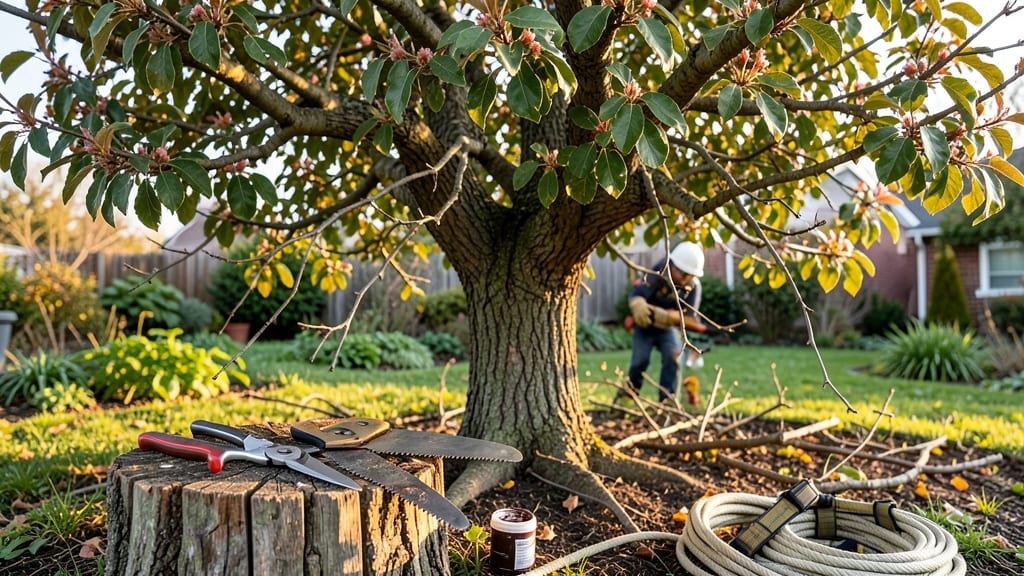
Big tree pruning isn't just about cutting branches—it's about saving your tree's life while keeping your property safe. 🌳 I learned that the hard way when a poorly made cut led to a rotten trunk and a tree that nearly took out my fence.
The right technique strengthens the canopy, prevents disease, and ensures those massive limbs don't become hazards during storms. You'll need sharp tools (pruners, saws, and a sturdy ladder), protective gear (gloves, goggles, and a harness if climbing), and a clear plan before you start.
Most mistakes happen because people rush—taking time to assess the tree's structure first makes all the difference. A single bad cut can weaken a tree for years, so precision matters more than speed.
What you'll end up with is a healthier tree that grows stronger, not just one with fewer branches. You'll spot weak limbs before they become problems, improve airflow to prevent fungal issues, and create a canopy that's both beautiful and structurally sound.
The satisfaction of seeing a tree thrive after careful pruning? Priceless. This works for any large tree—oaks, maples, or even fruit trees—but the key is adapting the approach to the tree's age and health. Let's get started with the right cuts for the right reasons.
📚 In This Guide
- What you need
- Instructions
- Tips and common mistakes
- Wrapping up and next steps
What you need
- ● Pruning saw: A bow saw (20-24" blade) or pole saw (for hard-to-reach branches). Opt for a curved or straight blade based on branch thickness.
- ● Loppers: Bypass loppers (18-24" handles) for cuts up to 2" in diameter.
- ● Pruning shears: Bypass or anvil shears (6-8" blades) for small branches (<1" thick).
- ● Extension pole: A 30-40 ft. fiberglass or aluminum pole with a saw attachment for high branches.
- ● Harness & rope: A full-body arborist harness (rated for your weight) + static rope (½" diameter) for climbing.
- ● Safety gear: Hard hat with face shield
- ● Heavy-duty gloves (cut-resistant)
- ● Safety glasses or goggles
- ● Steel-toe or composite-toe boots
- ● Ear protection (if using a chainsaw)
- ● Cleaning supplies: Rag, disinfectant (70% isopropyl alcohol), and sharp pruning tools to prevent disease spread.
- ○ Sealing wound paint: Tree wound dressing (optional, for cuts >2" diameter).
- ● Debris disposal: Heavy-duty trash bags or a tarp for collecting branches.
- ○ Optional (for pros): Chainsaw (for large branches >3" diameter)
- ● Stump grinder (if removing large stumps)
- ● Ladder or cherry picker (for ground-level access)
- ● Check local regulations—some areas require permits for large tree work.
- ● Review the tree’s health and structure (look for dead branches, disease, or pests).
- ● Plan for weather—avoid pruning during wet or windy conditions.
- ● Notify neighbors or property owners if branches overhang shared spaces.
Step-by-Step guide for pruning large trees safely
Here's how I approach big tree pruning—safely, strategically, and with tools that protect both you and the tree.
✂️ Step 1: Assess the Tree and Plan Your Cuts
Start by examining the tree from all sides to identify dead, diseased, or crossing branches. I look for branches that are rubbing against each other or growing inward—they’ll weaken the tree over time. Use a pruning guide or tree pruning app to visualize the cuts before you begin.
Focus on removing branches that are less than 1/3 the diameter of the trunk—these are easier to manage and less likely to cause structural damage. Mark your cuts with colored spray paint so you don’t miss any spots. This step is critical: rushing here leads to uneven cuts and weak healing.
🪴 Step 2: Gather the Right Tools and Safety Gear
Big tree pruning isn’t a job for hand pruners. You’ll need a pole saw for high branches, a chain saw for thicker limbs, and sharp pruning shears for fine cuts. I always wear gloves, safety glasses, and a hard hat—fallen branches don’t care if you’re prepared.
Don’t forget tree resin to seal larger cuts and rope or a harness if you’re working above shoulder height. A first-aid kit should be within reach, too. Safety isn’t optional here—even a small branch can cause serious injury if it falls the wrong way.
☀️ Step 3: Make Clean, Strategic Cuts
Start with the three-cut method for branches thicker than 2 inches: make the first cut 12-18 inches out from the trunk, angled upward. This prevents the branch from tearing the bark as it falls. The second cut is just outside the branch collar (the swollen area where the branch meets the trunk).
For smaller branches, cut just outside the branch collar at a 45-degree angle. Avoid leaving stubs—they invite disease and weaken the tree. If you’re removing a large limb, cut from the underside first to control the fall. Always look up before making the final cut to ensure no one is in the path.
⏰ Step 4: Clean Up and Monitor Healing
Remove all debris from the ground and dispose of diseased branches properly. Seal larger cuts with tree wound dressing (like Tanglefoot Tree Wound Pruning Sealer) to protect the tree from pests and rot. I check the tree every few weeks for signs of stress, like oozing sap or fungus.
Water the tree deeply after pruning to help it recover. Avoid heavy pruning in late summer or early fall—this stresses the tree before winter. If you’re pruning in late winter or early spring, the tree will heal faster with new growth on the horizon.
🌱 Step 5: Maintain Year-Round Care
Big trees need regular maintenance, not just one-time pruning. I schedule a light check every season to remove small dead branches before they become hazards. Fertilize in early spring with a balanced tree fertilizer to support recovery.
Watch for pests or disease after pruning—newly cut areas are vulnerable. If you see sawdust-like frass or mushrooms growing from cuts, act fast. A healthy tree will show new growth within a few weeks of proper pruning. If it doesn’t, you may have cut too aggressively.
Tips & tricks for perfect big tree pruning
Pruning big trees isn't just about cutting branches—it's about preserving health and safety. Here's how to avoid common pitfalls and make every cut count.
Branch Size Matters: When Step 1 says to focus on branches less than 1/3 the trunk's diameter, remember this rule of thumb: if you can't comfortably wrap your hands around a branch, it's too big for hand tools. For those larger branches, a pole saw becomes essential. I learned this the hard way after struggling with a stubborn limb that ended up snapping unpredictably. Always assess size before choosing tools—safety starts with the right equipment.
Safety First with High Cuts: Step 2 emphasizes wearing a harness when working above shoulder height, but here's what nobody tells you: practice your climbing and cutting techniques on the ground first. I've seen too many people rush into high branches without testing their footing or tool control. Set up a practice session in your yard with a sturdy ladder to get comfortable with your pole saw's weight and balance before tackling the real tree. This simple prep can prevent dangerous situations.
The Three-Cut Method Explained: Step 3's three-cut method for branches thicker than 2 inches is brilliant, but the execution is where mistakes happen. That first cut should be made on the underside of the branch, 12-18 inches from the trunk, angled upward. This creates a hinge that controls the branch's fall. The key is to make this cut cleanly—if it's uneven, the branch could tear when it falls. I always test the hinge by gently pulling downward before making the final cut. This visual check ensures you're ready for the branch to drop safely.
Seasonal Timing Secrets: While Step 4 mentions avoiding late summer/fall pruning, here's the timing detail that makes all the difference: late winter to early spring is ideal because trees are dormant but about to burst into growth. This timing gives them maximum recovery time before summer heat stress. I've noticed that trees pruned in this window show new growth within 3-4 weeks, while those pruned in other seasons often take twice as long to recover. Plan your pruning around this window for best results.
Pro Tips for Big Tree Pruning
- Pruning big trees isn't just about cutting branches—it's about preserving health and safety.
- Branch Size Matters: When Step 1 says to focus on branches less than 1/3 the trunk's diameter, remember this rule of thumb: if you can't comfortably wrap your hands around a branch, it's too big for hand tools.
- Safety First with High Cuts: Step 2 emphasizes wearing a harness when working above shoulder height, but here's what nobody tells you: practice your climbing and cutting techniques on the ground first.
Frequently asked questions
Got questions about big tree pruning? You’re not alone—this task can feel overwhelming, especially when safety and long-term growth are on the line. Below, we’ve tackled the most common queries to help you prune with confidence, whether you’re a DIY enthusiast or hiring a pro.
When is the best time of year to prune a big tree?
The ideal window is late winter or early spring (just before new growth starts), but timing depends on your tree’s species and goals. Avoid heavy pruning in late summer or fall—it can stress the tree before winter dormancy. Learn more about seasonal pruning tips tailored to your climate.
Can I prune a big tree myself, or should I hire a professional?
Small branches or minor shaping? DIY is fine if you’re comfortable with heights and tools. But for trees over 30 feet, near power lines, or with complex canopies, hire an ISA-certified arborist. Safety risks (like falling limbs or equipment malfunctions) aren’t worth cutting corners. Find local pros here.
What’s the difference between “thinning” and “topping” a big tree?
Thinning:
Removing select branches to improve airflow and light penetration—healthier for the tree and safer long-term. Topping: Brutally cutting the top off (like a hedge), which creates stubs that attract pests and weakens the tree. Never top a big tree!
How do I know if my tree is “over-pruned” after cutting?
Watch for these red flags:
- Excessive water sprouts (fast-growing, weak shoots) near cuts.
- Leaves turning yellow/brown or premature leaf drop.
- Large wounds (bigger than 2” in diameter) that won’t seal naturally.
What’s the safest way to remove a big branch without damaging the tree?
Use the “3-cut method” for branches 3”+ in diameter:
- Make an undercut (notch) on the branch’s underside, 18” from the trunk.
- Cut above the notch (on the top side) to create a hinge.
- Sever the branch just outside the branch collar (the swollen area at the trunk).
Wrapping up and next steps
Big tree pruning isn’t just about trimming branches—it’s an investment in long-term safety, health, and beauty for your landscape. 🌳 By following seasonal best practices, using the right tools, and prioritizing safety, you’ll nurture a stronger, more resilient canopy that thrives year after year.
Whether you’re a DIY enthusiast or hiring a pro, consistent care is the key to a thriving tree.
Ready to take action? Start by inspecting your trees this season—note any overgrowth, dead limbs, or structural risks. If pruning feels overwhelming, consult a certified arborist for a tailored plan. Your trees (and future generations!) will thank you. 🌿✨