
Pruning
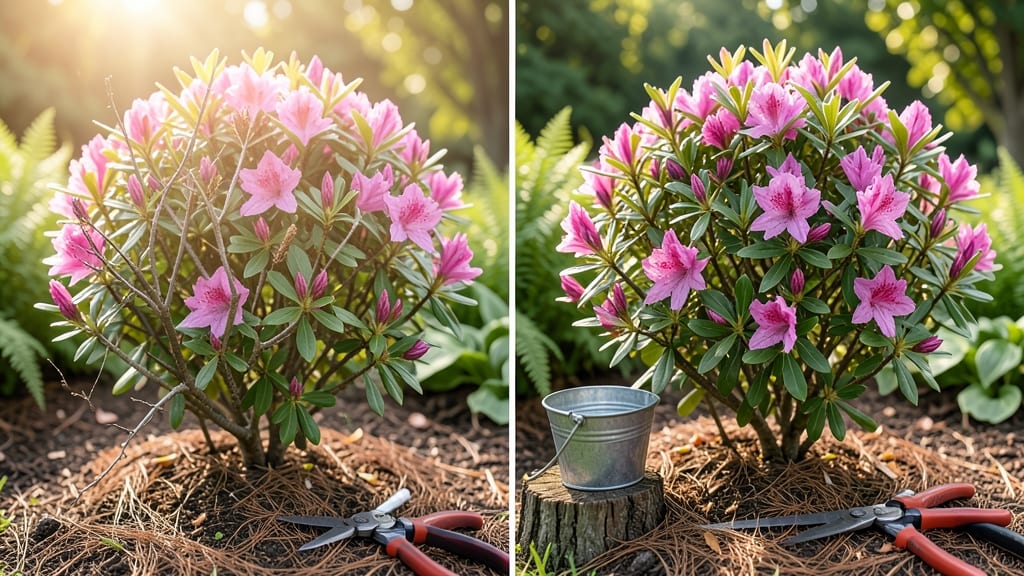
Those azalea pruning mistakes turn your once-lush shrubs into bare sticks after pruning—that’s the telltale sign of over-trimming, one of the most common errors that leaves azaleas looking like sad skeletons. ✂️ I’ve seen this happen when gardeners panic after a harsh winter or try to "shape" their azaleas like topiaries, but azaleas bloom on old wood, so aggressive cuts mean fewer flowers next spring.
The real damage happens when you cut back into last year’s growth or remove more than one-third of the plant at once. Azaleas store energy in their stems, so pruning too early (before blooms fade) or too late (after new growth starts) throws off their whole cycle.
The fix? Wait until right after flowering, then trim only the oldest stems back to a healthy bud.
What you’ll end up with is a bushier, healthier azalea that blooms twice as hard next season. The key is patience—focus on thinning out crowded branches instead of hacking back everything. Even severely over-pruned azaleas can recover if you stop cutting and let them focus on regrowth.
This works for all azalea types, from evergreen to deciduous, and even applies to rhododendrons. The difference between a sad shrub and a showstopper often comes down to a few simple cuts made at the right time. Let’s turn those bare stems into a floral masterpiece.
Root Causes Of Botched Azalea Trims
Pruning azaleas wrong isn’t just about a missed snip—it’s often the result of misunderstandings about how these shrubs grow and thrive. Let’s break down the why behind the most common pruning blunders, so you can avoid repeating them.
---
Azaleas are evergreen but dormant in late winter to early spring, making this the only ideal time to prune. Cutting at the wrong season disrupts their natural growth cycle:
- **🌱 Spring/Summer Pruning (Biggest Mistake!) - Azaleas flower on old wood (last year’s growth), meaning new blooms form from buds set in late summer/fall. - Pruning in spring or summer removes next year’s flowers** before they even form. - Science Note: The plant’s apical dominance (growth hormones at branch tips) is disrupted, leading to weak, leggy growth and fewer blooms.
- **🍂 Fall Pruning (Also Risky) - Late fall cuts can expose tender new growth to frost damage, weakening the plant. - If pruned too late, azaleas may not harden off properly for winter, increasing susceptibility to cold stress or fungal diseases (like powdery mildew).
💡 Pro Tip: Mark your calendar for February to early March**—just as buds swell but before they burst. This ensures you’re pruning dead or overcrowded wood without sacrificing blooms.
---
Azaleas are slow growers and sensitive to aggressive trimming. When you remove more than 25-30% of the plant’s foliage in one go, you trigger stress responses that can be fatal:
- **🌿 Reduced Photosynthesis 🌿 - Leaves are the plant’s food factories**, converting sunlight into energy. Over-pruning leaves too little leaf surface to sustain roots and new growth. - Result: Stunted growth, yellowing leaves (chlorosis), or even plant decline if severe.
- **🦠 Weakened Immunity 🦠 - Stress from heavy pruning makes azaleas vulnerable to pests** (like lace bugs or scale) and diseases (like root rot). - Science Note: Pruning stimulates ethylene gas production, a plant stress hormone that can accelerate decay in wounds.
- **🌱 Leggy, Unbalanced Growth 🌱 - Aggressive cuts encourage sparse, elongated branches** as the plant stretches to regain light exposure. - Fix: Prune gradually over 2-3 years if shaping is needed, never more than 1/3 of the plant per year.
---
Even the right cuts can go wrong if you nick the branch collar (the swollen area where branches meet the stem). This is a fatal error for azalea recovery:
- **🔪 Topping or Flattening 🔪 - Cutting branches flat across (like a hedge) removes the cambium layer** (growth tissue), sealing off nutrients and water flow. - Result: Branches die back from the cut surface, leaving ugly stubs.
- **🌿 Underestimating Branch Size 🌿 - Small branches (under ½ inch) should be pinched or cut just above a leaf bud, not sawed. - Larger branches need clean, slanted cuts (45° angle) 1/8 inch above the collar to prevent water pooling (which causes rot).
✨ Critical Fix: Always leave the branch collar intact—it’s the plant’s natural healing seal. Use sharp, bypass pruners (never dull shears) for clean cuts.
---
Pruning is just the first step—what you do after determines whether your azalea thrives or struggles:
- 💦 No Watering or Mulching 💦 - Pruned azaleas transpire more (lose water faster) as they heal. Without extra hydration, they wilts or drops buds**. - Solution: Water deeply (1-2 inches) after pruning and mulch (2-3 inches of organic mulch) to retain moisture.
- **🌡️ No Fertilizer Adjustments 🌡️ - Pruning depletes stored nutrients. Over-fertilizing post-prune can burn roots**, while under-fertilizing starves new growth. - Fix: Use a balanced, slow-release fertilizer (10-10-10) 4-6 weeks after pruning to support recovery.
- **🚫 Leaving Ragged Cuts 🚫 - Uneven cuts slow healing and invite pests. Always smooth jagged edges with pruners or a knife.
--- 📊 Key Takeaway: Most azalea pruning mistakes stem from timing, technique, or neglecting post-care. By understanding these root causes, you can prune with confidence—and keep your shrubs blooming beautifully for years**.
Fixing Your Azalea’s Pruning Woes
Azalea pruning mistakes can leave your shrubs looking ragged, stressed, or even dead—but the good news is that most issues are reversible with the right approach. Below, we’ll map common pruning errors to practical fixes and prevention tips to help your azaleas bounce back beautifully.
---
Cause: Cutting back too aggressively (more than 1/3 of the plant at once) or shearing into old wood. Fix: 1. 🔪 Trim Back to Healthy Growth - Locate the largest, healthiest buds on stems (they’re usually plump and green). - Cut just above a bud (about ¼ inch above) at a 45-degree angle to encourage outward growth. - Avoid "heading back" (cutting into old, woody stems)—this stresses the plant.
2. 🌱 Stimulate New Growth - Apply a balanced fertilizer (10-10-10) after pruning to support recovery. - Water deeply to reduce shock.
Prevention: ✅ Prune in stages—never tackle more than 1/3 of the plant in one session. ✅ Wait until after blooming (late spring/early summer) to prune—this avoids cutting off next year’s flowers. ✅ Use sharp, clean shears to prevent tearing stems.
---
Cause: Pruning during or right before flowering (winter/early spring) removes next year’s buds. Fix: 1. 📅 Wait for the Right Moment - After blooms fade (late spring/early summer) is ideal for most azaleas. - For late-blooming varieties, prune in early fall (but avoid heavy cuts).
2. 🌸 Salvage This Year’s Flowers - If you pruned too early, skip pruning this year and focus on light shaping next season.
Prevention: ✅ Mark your calendar—prune 4-6 weeks after flowering for best results. ✅ Research your azalea type (early vs. late bloomers) to avoid timing mistakes.
---
Cause: Using hedge trimmers or over-shearing, which creates dense, leggy growth and weak stems. Fix: 1. 🎨 Prune for Structure, Not Perfection - Step back and visualize—aim for an open, airy shape (azaleas hate being boxed in). - Thin out crowded branches first, then lightly shape with hand pruners.
2. 🌿 Encourage Bushier Growth - Cut just above outward-facing buds to promote a fuller, more natural look. - Avoid top-heavy cuts—this makes plants unstable.
Prevention: ✅ Skip the hedge trimmers—hand pruners give you more control. ✅ Prune in layers—start at the bottom and work upward for a softer look.
---
Cause: Leaving dead, diseased, or crossing branches unattended, which invites pests and rot. Fix: 1. 🔍 Identify and Remove the Bad - Dead wood = brittle, no leaves, brown inside when cut. - Diseased wood = discolored, oozing sap, or fungal spots. - Crossing branches = rub against each other, creating wounds. - Cut these out completely—don’t leave stubs!
2. 🧼 Sanitize Your Tools - Wipe shears with rubbing alcohol before and after pruning to prevent spreading disease.
Prevention: ✅ Inspect your azalea every 6 months—remove dead wood as soon as you spot it. ✅ Improve airflow by thinning dense areas (reduces humidity, which fuels fungus).
---
Cause: Pruning in direct midday sun, which can burn fresh cuts and stress the plant. Fix: 1. 🌅 Prune in the Morning or Evening - Choose cool, overcast days if possible. - If you must prune in sun, water the plant thoroughly before and after.
2. 💦 Hydrate & Protect - Mulch around the base to retain moisture. - Avoid pruning during heatwaves—wait for milder weather.
Prevention: ✅ Check the forecast—prune when temps are below 80°F (27°C). ✅ Water deeply 1-2 days before pruning to prep the plant.
--- - 🌱 Feed regularly—azaleas love acidic soil (pH 4.5-5.5). Use azalea/camellia fertilizer in spring and fall. - 💧 Water at the base—avoid wetting leaves to prevent fungal issues. - 🍄 Watch for pests—spider mites and scale love stressed azaleas. Treat with neem oil if needed.
--- Remember: Azaleas are forgiving! Even if you’ve over-pruned, light shaping and proper care can bring them back to health. The key is patience, precision, and timing—your shrubs will thank you with vibrant blooms for years to come. 🌸✨
Frequently asked questions
Why do my azaleas look like they’ve been stripped bare after pruning?
This is classic over-pruning—cutting more than one-third of the plant at once. Azaleas store energy in their stems, so aggressive trimming removes next year’s blooms and stresses the plant. The fix? Focus on thinning out crowded branches rather than hacking back everything. Prune gradually over 2-3 years if shaping is needed.
Can I prune azaleas in the spring when they’re in bloom?
Never! Azaleas bloom on old wood (last year’s growth), so pruning during or right after flowering removes next year’s buds. Wait until 4-6 weeks after blooms fade (late spring/early summer) for most varieties. For late-blooming types, prune in early fall instead.
What’s the best way to fix leggy, sparse azalea growth?
Leggy growth happens when you prune too heavily or cut into old wood. To fix it, cut just above outward-facing buds at a 45-degree angle to encourage bushier growth. Avoid topping (cutting flat across branches)—this creates weak, top-heavy plants. Prune in stages over 2-3 years to avoid shocking the plant.
How do I know if I’ve damaged the branch collar when pruning?
The branch collar is the swollen area where branches meet the stem—it’s crucial for healing. If you’ve cut into it, you’ll see ragged edges or stubs instead of clean cuts. Always cut 1/8 inch above the collar at a 45-degree angle using sharp, bypass pruners. Never use hedge trimmers—they crush the collar.
Will my severely over-pruned azalea recover?
Azaleas are resilient. Stop pruning immediately and focus on care: water deeply, mulch with 2-3 inches of organic material, and fertilize with acid-loving plant food (pH 4.5-5.5). New growth should appear within 4-6 weeks. Avoid heavy pruning for at least 1 year to let the plant recover.